
The short version: basking sharks do still turn up off Cornwall, but they have become genuinely rare. The historic peak runs from mid-May to early July. The best places to watch from are the far-west headlands, particularly Gwennap Head, Lizard Point and the cliffs around Land’s End, and watching from land costs nothing. But your odds in any given week are low, and much lower than they were a decade ago.
I’d rather tell you that up front than sell you a shark safari and let you find out on the boat.
This is still one of the great British wildlife sights when it happens. A thirty-foot fish cruising along the surface with its mouth hanging open is not something you forget. It’s just no longer something you can plan a trip around, and plenty of pages still ranking for this will happily let you believe otherwise.
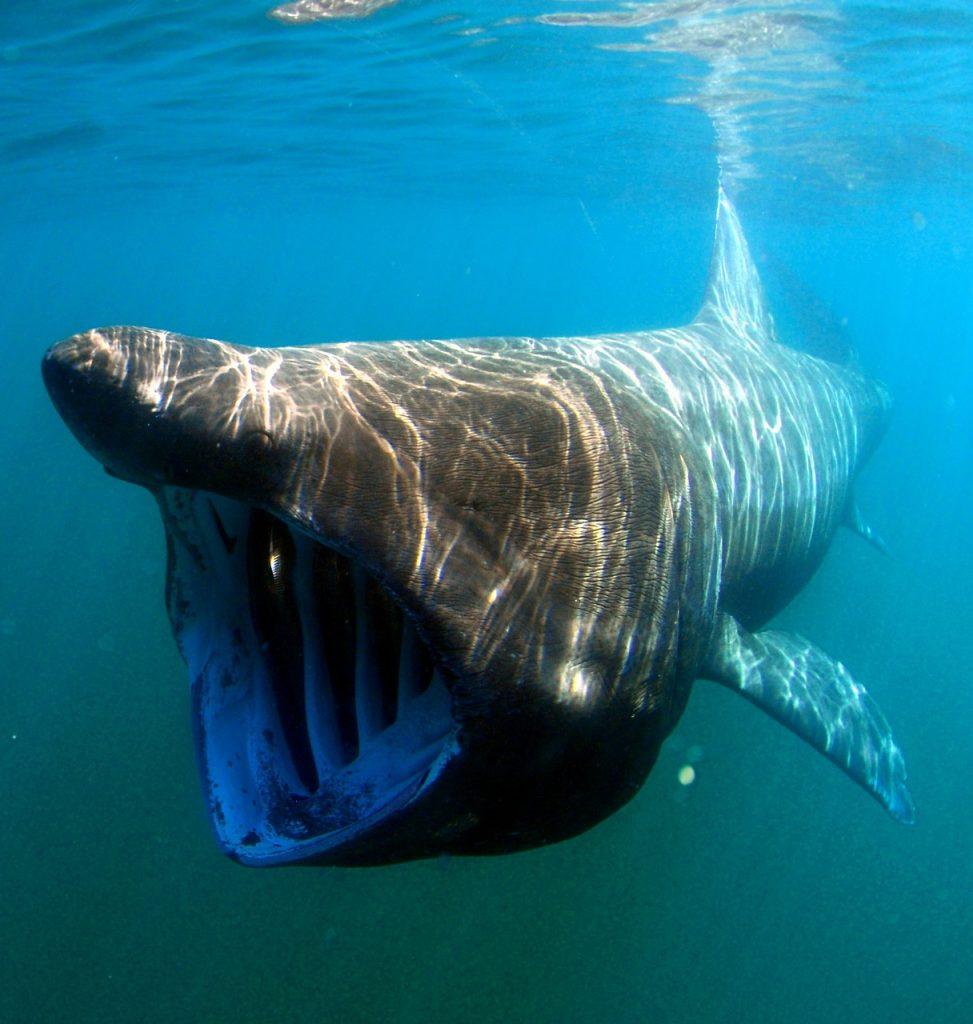
What’s actually happened to Cornwall’s basking sharks
For a long stretch, Cornwall was one of the best places in Europe to see a basking shark from dry land. That has changed, and the people who make their living taking visitors out to sea are the ones saying so loudest.
Padstow Sealife Safaris wrote in May 2026 that it had been close to ten years since a basking shark was spotted on one of their trips, and that the handful still seen each season tend to be further south or well offshore. Newquay Sea Safaris and Fishing put a blunt note on their own booking page that very few basking sharks were seen off the north coast across 2024 and 2025. Both of those are businesses telling you the trip might not be worth your money. That’s worth listening to.
The likeliest explanation is a straightforward one. Basking sharks follow plankton, plankton follows water temperature, and as the seas have warmed, the productive water has shifted north. Scotland, particularly the Hebrides, and the west of Ireland now get the numbers Cornwall used to. Conservationists at Cornwall Wildlife Trust have been making the same point for years.
An older version of this article predicted that warming seas would bring more basking sharks to Cornwall. That turned out to be exactly backwards, and it’s been corrected rather than quietly deleted, because getting it wrong is part of the record.
When to look
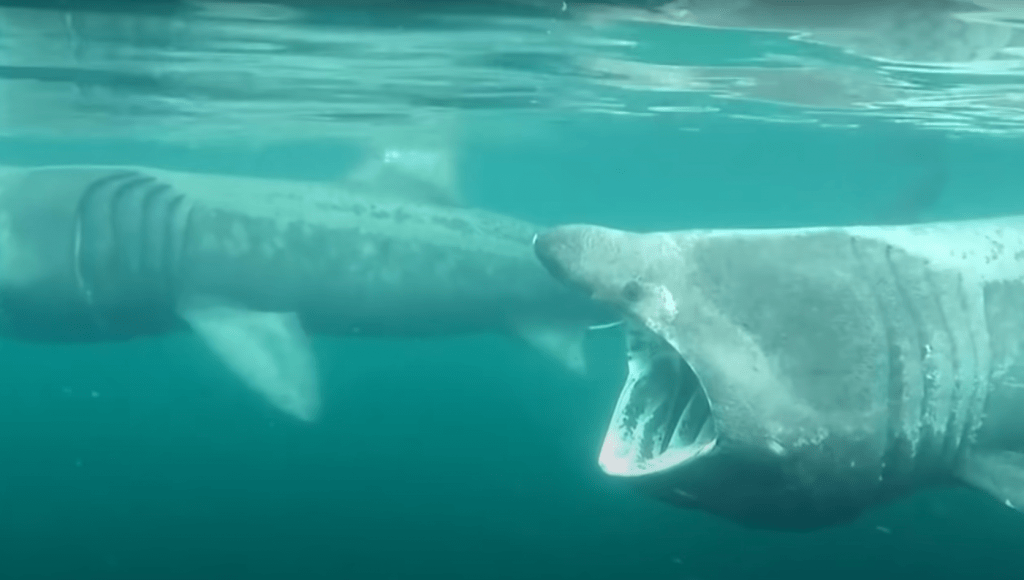
The first sharks can arrive in April as the water starts to warm, and stragglers are recorded into early autumn. But the window that actually matters is mid-May to early July, with June historically the strongest month.
Within that window, conditions matter more than the date. You want a bright, calm day with light winds and low swell. Sunshine drives the plankton to the surface, the sharks follow it up, and a flat sea means you can actually pick out a fin. On a grey, choppy day you could have three sharks a hundred metres offshore and never know.
Early morning and late afternoon, when the light is low and side-on to the water, tend to be kinder for spotting than flat midday glare.
Where to look from land
Watching from a headland is free, it’s the way most Cornish sightings actually happen, and honestly it’s the approach I’d recommend now. Go for the walk. Treat the shark as a bonus. Take binoculars if you have them, though a high vantage point and a calm sea matter more than optics.
What you’re looking for is not a shark shape. It’s two dark fins, a metre or two apart, moving slowly in a straight line: the dorsal fin and the tip of the tail. That gap between them is what gives away the size of the thing underneath.
Gwennap Head
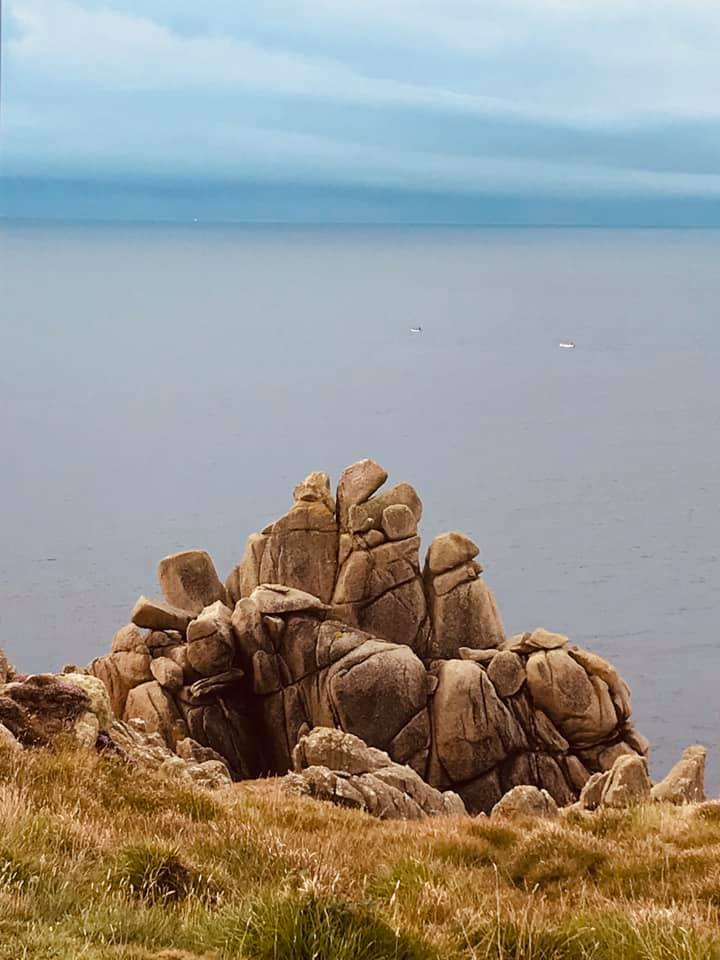
If I had one afternoon to spend on this, I’d spend it here. Gwennap Head sits about four miles south of Land’s End, reached on an easy walk from the car park at Porthgwarra, and it looks out over deep water that comes in close to the cliff.
There’s a National Coastwatch Institution lookout station on the headland, staffed by volunteers who spend their days watching that stretch of sea and who are generally happy to tell you what’s been about. Their own wildlife notes list basking sharks between April and September, alongside sunfish, thresher sharks and the occasional leatherback turtle, and are refreshingly clear that all of them count as scarce visitors.
The walk itself is short and gentle enough for younger children or less mobile family members, which is not something you can say about most of the good watchpoints.
Lizard Point

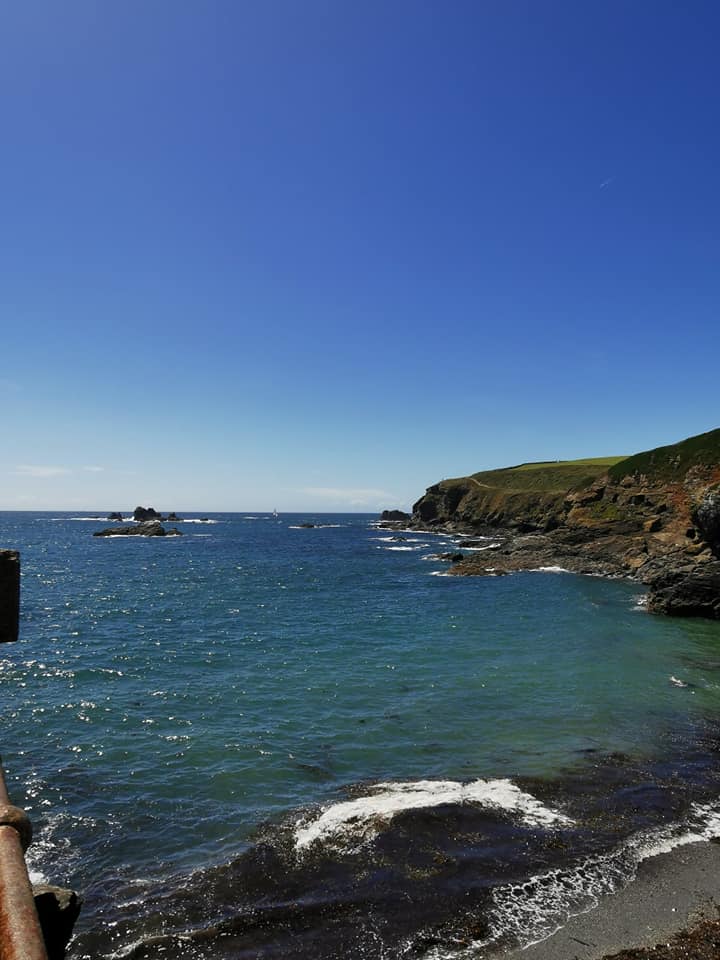
Britain’s most southerly point, and a genuinely excellent seawatching spot for reasons that have nothing to do with luck: the elevation is good, the water is deep close in, and plankton blooms are common along this stretch.
You can make the walk as long or short as you like from the Lizard Point car park, which makes it an easy one to fold into a day that has other plans in it. Seals are near enough guaranteed. Dolphins are a reasonable bet. Basking sharks are the long shot.
Sennen Cove, Gwenver and Land’s End
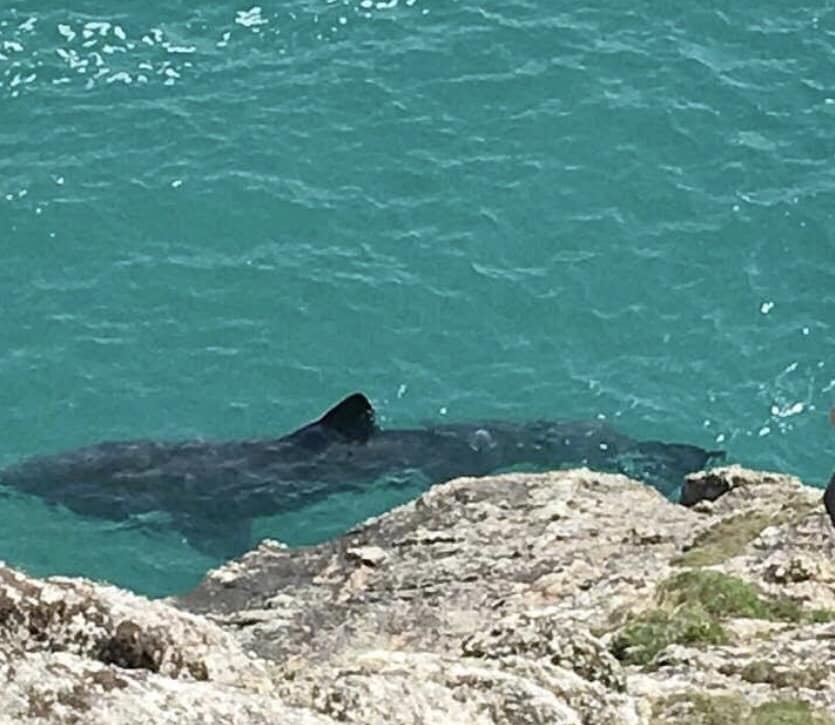
The clifftop path between Sennen Cove and Land’s End is about three miles, with big views the whole way and no shortage of places to stop and scan the water. Whitesand Bay at Sennen has produced sightings over the years, both from the beach and from boats.
There’s a passage in Sam Bleakley’s Meditation and Surfing that has stuck with me for years, about hoping his children would one day surf with dolphins and basking sharks at Gwenver, the beach next door to Sennen. It’s a lovely thing to read and a slightly melancholy one now, given where the numbers have gone. Worth a read all the same if you’re the sort who surfs.
Dogs are seasonally welcome along much of this stretch, so it doubles as a proper dog walk. Our full rundown of dog-friendly beaches in Cornwall covers the seasonal restrictions in more detail.
Mount’s Bay
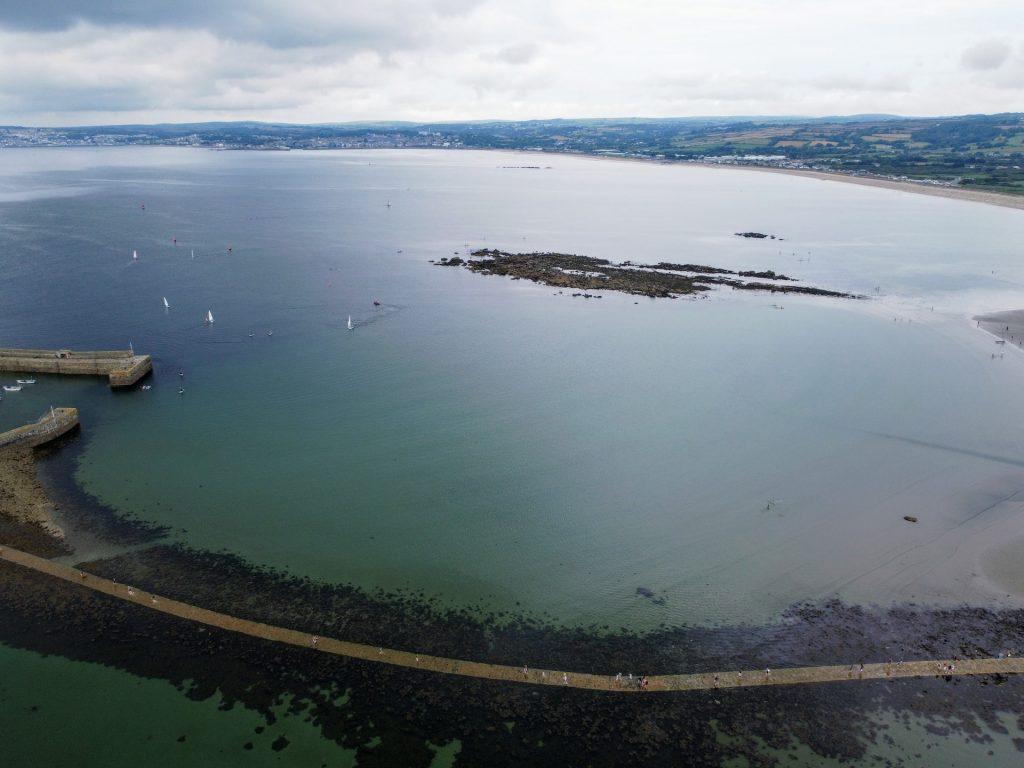
The sweep of coast between Penzance and Porthleven has a long history of sightings, and locals still walk the clifftops with binoculars through late spring out of habit as much as expectation.
The cliff path towards Trewavas Head from Praa Sands gives you height, distance and a run of viewpoints, and it’s a fine walk whether or not anything shows up.
The St Ives coast
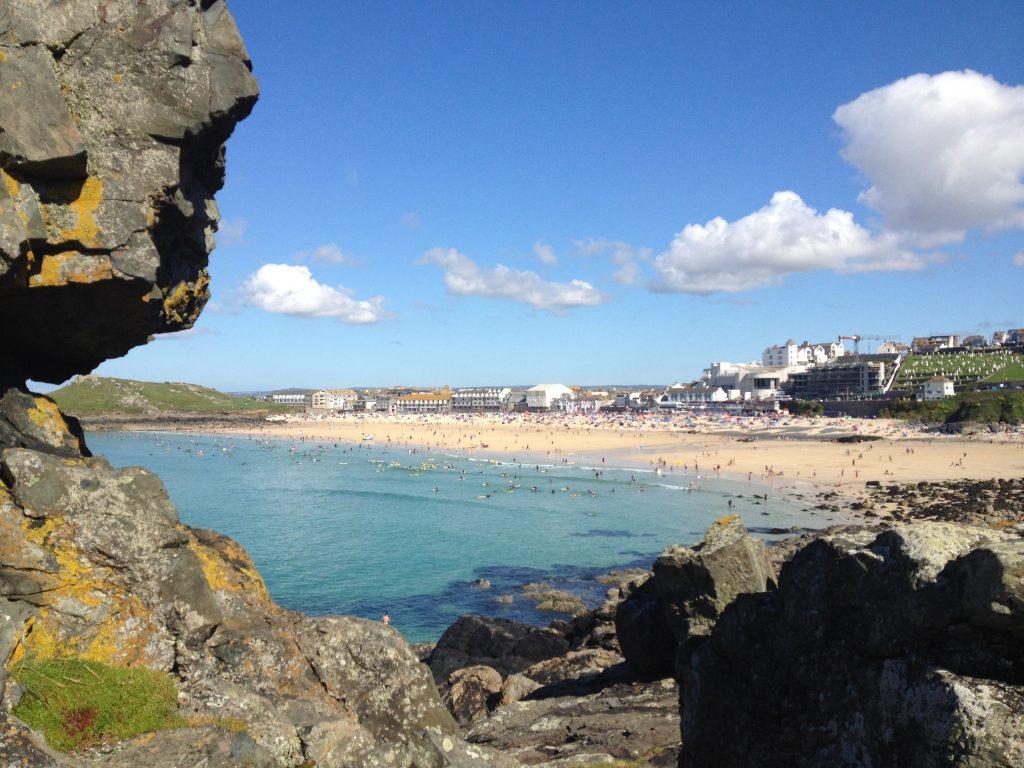
The water off St Ives has produced some of the more dramatic Cornish sightings over the years, including basking sharks breaching clear of the surface, which is a startling thing to watch a five-tonne animal do.
Blue sharks are also present in Cornish waters, though they’re an offshore species you’d only realistically see on a dedicated trip. If you’ve read somewhere that there are great white sharks off Cornwall, there aren’t. There has never been a confirmed great white sighting anywhere in UK waters, and we’ve written more about which sharks genuinely are out there in our guide to sharks in Cornwall.
Boat trips: what’s actually running
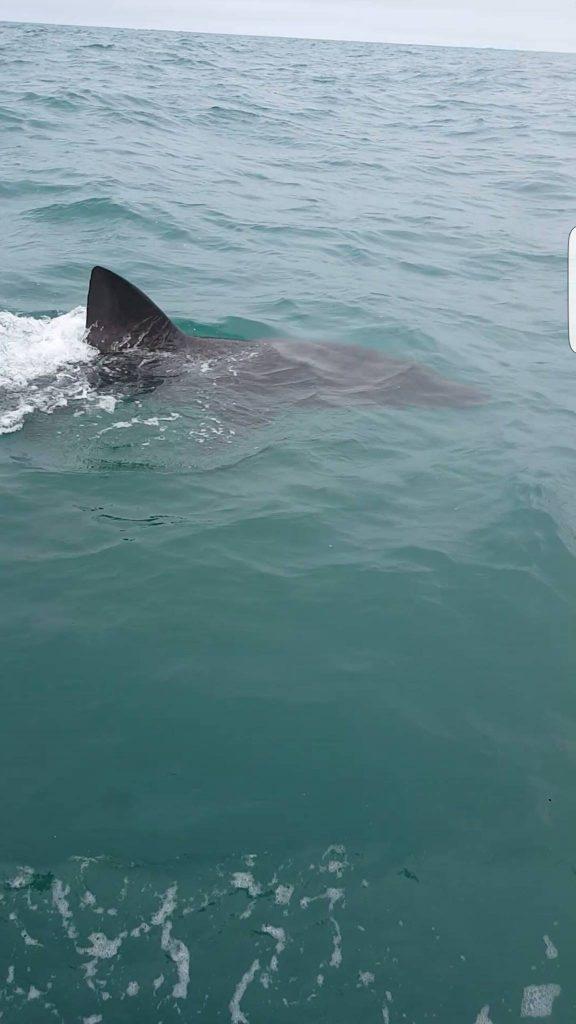
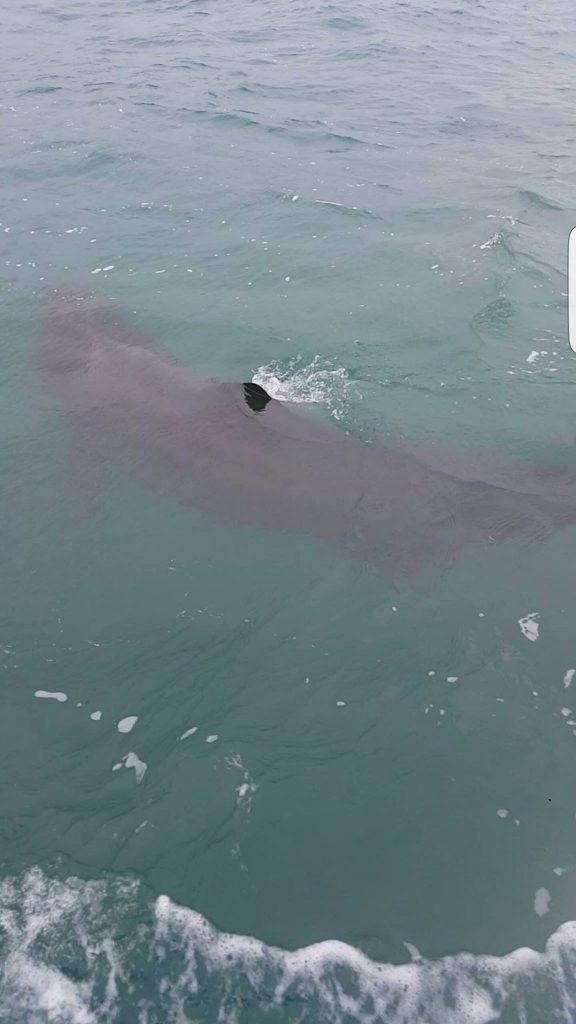
This is where the picture has changed most, and where old guides will send you badly wrong. Two operators that used to be the standard recommendations for basking shark trips in west Cornwall are no longer taking bookings for them, so treat any list that still names them as out of date.
What is genuinely trading, and honest about the odds:
- Newquay Sea Safaris and Fishing — the same skipper and boat that used to trade as Atlantic Diving, running out of Newquay. They still list a basking shark trip but only as a private charter, with a warning on the page that sightings have been very scarce. Call before you plan around it.
- Marine Discovery, Penzance — a proper wildlife operation running out of Mount’s Bay, with basking sharks listed as one of many possible sightings rather than the headline.
- AK Wildlife Cruises, Falmouth — long-running wildlife cruises off the south coast, where the current draw is whales, dolphins and seabirds.
- Padstow Sealife Safaris — worth reading their own write-up on basking shark decline before you book anything with anyone.
My honest advice: book a wildlife trip because you want to see Cornish marine life, not because you want to see a basking shark specifically. On that basis you’ll almost certainly have a good day. Book it as a shark trip and you’re probably setting yourself up for a disappointment, and a fairly expensive one.
All trips are weather-dependent, all of them need calm seas to work, and every reputable operator follows the Shark Trust’s code for keeping a respectful distance. Basking sharks are protected in UK waters, and disturbing one is a criminal offence, not a technicality.
What you’re far more likely to see instead
If you go out looking for basking sharks and come back without one, you will almost certainly still have seen something worth the trip. Cornish waters are busy, whatever the sharks are doing.
- Grey seals — near enough a certainty at Lizard Point, Godrevy and half the coves in between.
- Dolphins — common bottlenose and short-beaked common dolphins are regular from both boat and shore. Our guide to seeing dolphins in Cornwall covers the reliable spots.
- Sunfish — the other big oddity that drifts up in warm summers, and one people regularly mistake for a shark fin at distance.
- Seabirds — gannets diving are a spectacle in their own right and often a clue that there’s bait in the water. Worth pairing with our Cornwall birdwatching guide.
If you do see a basking shark, record it. Both the Shark Trust and Cornwall Wildlife Trust run sightings schemes, and with numbers this thin, individual records genuinely matter to the people tracking what’s happening.
What a basking shark actually is
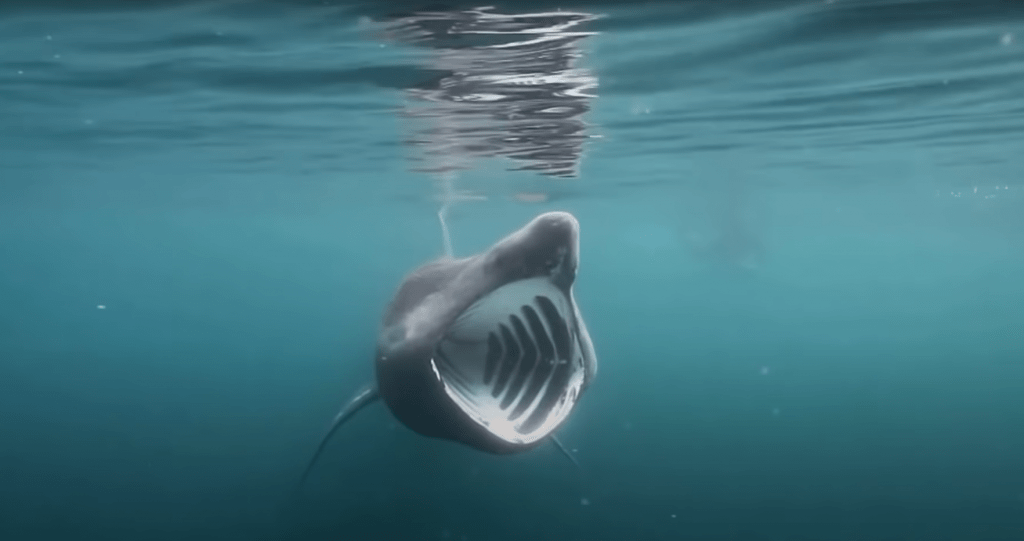
The basking shark is the second largest fish in the ocean after the whale shark. A mature adult reaches somewhere around 30 to 40 feet, roughly the length of a double-decker bus, and can weigh in the region of seven tonnes.
They swim with their mouths gaping open, which looks alarming and isn’t. Inside are somewhere around 1,500 tiny hooked teeth, arranged in six rows on the top jaw and nine on the bottom, and they aren’t used for feeding at all. The actual work is done by gill rakers that strain plankton out of enormous volumes of water as the shark cruises forward.
They’re one of only three shark species that feed this way, alongside the whale shark and the megamouth. The name comes from the habit of hanging at the surface where the plankton is, which from a clifftop reads as an animal lazily sunbathing.
Look for a grey-brown body, paler underneath, and that tall rounded dorsal fin which often flops slightly to one side.
They grow slowly and breed slowly, which is why the population has been so slow to recover. British and Irish waters supported a commercial fishery for their liver oil well into the twentieth century, and the UK finally gave the species full legal protection in 1998. The IUCN still lists the basking shark as endangered globally.
Where they go in winter was a mystery for a long time. Satellite tagging has since shown that rather than vanishing, they move into deeper water along the continental shelf edge and further south in the Atlantic, staying below the surface where nobody was looking for them.
Common questions
When are basking sharks in Cornwall?
The main window is mid-May to early July, with June historically the strongest month. Sharks can arrive as early as April and the odd one is recorded into early autumn. Recent seasons have been very thin in Cornwall specifically, so treat any sighting as luck rather than a fixture.
Where is the best place to see basking sharks in Cornwall?
From land, the far-west headlands: Gwennap Head near Porthgwarra, Lizard Point, and the cliffs between Sennen Cove and Land’s End. All three give you height, deep water close inshore and a decent walk regardless of what turns up.
Are basking sharks dangerous to humans?
No. They’re filter feeders with no interest in anything larger than plankton, and there are no records of a basking shark attacking a person. Give them room anyway, both out of respect and because they’re a protected species and disturbing one is an offence in UK waters.
Can you swim with basking sharks in Cornwall?
The snorkelling trips that used to run out of west Cornwall are not currently operating, largely because there haven’t been enough sharks to justify them. If that changes it’ll be the licensed wildlife operators who announce it first. Do not go chasing one from a private boat or a board.
Are there great white sharks in Cornwall?
No. Despite decades of reported sightings and a fair amount of newspaper excitement, there has never been a single confirmed great white shark record in UK waters. Blue sharks and porbeagles are genuinely present offshore, and both are far more interesting than the myth.
Worth going anyway
None of this is a reason not to go and look. An afternoon on the cliffs at Gwennap Head or the Lizard with a flask and a pair of binoculars is a good afternoon whether or not a fin appears, and the odds are never zero.
Just go with your expectations set honestly. And if you do get one, stand still, watch it for as long as it’ll let you, and then tell the Shark Trust about it.

Introducing Eliot, the Editor here and Cornwall local with a wanderlust spirit and an insatiable appetite for adventure. With a passion for the great outdoors, he can often be found catching waves on his surfboard, scaling peaks on a hiking trail, or discovering hidden gems in his exploration of Cornwall.