
The best places to paddleboard in Cornwall are the sheltered ones. For flat, forgiving water, head for the estuaries — Loe Beach near Truro, the Helford, the Camel at Padstow, and the River Fowey. For the views people travel for, it’s Marazion under St Michael’s Mount and Kynance Cove on the Lizard. North coast beaches like Sennen and Perranporth can be brilliant, but only on a genuinely flat day.
Paddleboarding is one of my favourite things to do down here. The first time I ever stood on a SUP it took me an embarrassingly long time to find my balance — but since then I’ve loved every second of it.
The thing nobody tells you is that in Cornwall the spot matters more than the skill. Pick the wrong beach on the wrong day and you’ll spend an hour getting nowhere. Pick the right estuary and it’s the most peaceful thing you’ll do all week.
So here are my 12 favourite paddleboarding spots in Cornwall, what each one is actually like, and where to hire a board when you get there.
Quick Picks: Which Spot Is Right for You?
- Never stood on a board before? Loe Beach at Feock, or the Gannel at Crantock. Sheltered, shallow, and both have hire and lessons on site.
- Want the photo? Marazion, under St Michael’s Mount. Nowhere else in Britain looks like it.
- Paddling with kids? The Camel Estuary at Rock, or the Helford. Calm water, sandbars to stop on, cafés at both ends.
- Experienced and after an adventure? Kynance Cove and the Lizard, or Porthcurno. Both stunning, both exposed — check the forecast properly.
- Got your own board and want a whole day of it? The River Fowey from Lostwithiel down to the sea.
1. Gyllyngvase Beach, Falmouth
My first ever paddleboard in Cornwall was at Gyllyngvase — Gylly to everyone who lives here — and the memory has stuck. It’s on the south coast and tucked into a bay, so the water is usually a calm, tranquil blue. Lifeguards in season, plenty of open water, and a marked safe zone to potter about in.
Take your time finding your balance in the shallows, then pick a direction. (Watch the wind — it’s often much easier going one way than the other.) Look left and you’ll see Pendennis Castle on the headland; you can paddle along to Castle Beach and take it in as you go. Head the other way and you’ll swing round to Swanpool, where there’s a beach café for a break.
One honest heads-up on hire. WeSUP ran the SUP centre on Gylly for years and it was the obvious place to grab a board. The company went into liquidation and was dissolved in April 2025, and the old website address now points somewhere else entirely. So don’t turn up expecting to hire on the sand — bring your own, or sort a board elsewhere first.
Once you’re off the water there are restaurants, bars and cafés right on the beach. Worth knowing: Gylly has a daytime dog restriction from 15 May to 30 September, 10am to 6pm, under Cornwall Council’s beach dog order. More on the town in our guide to Falmouth.
2. Loe Beach, Feock (Near Truro)
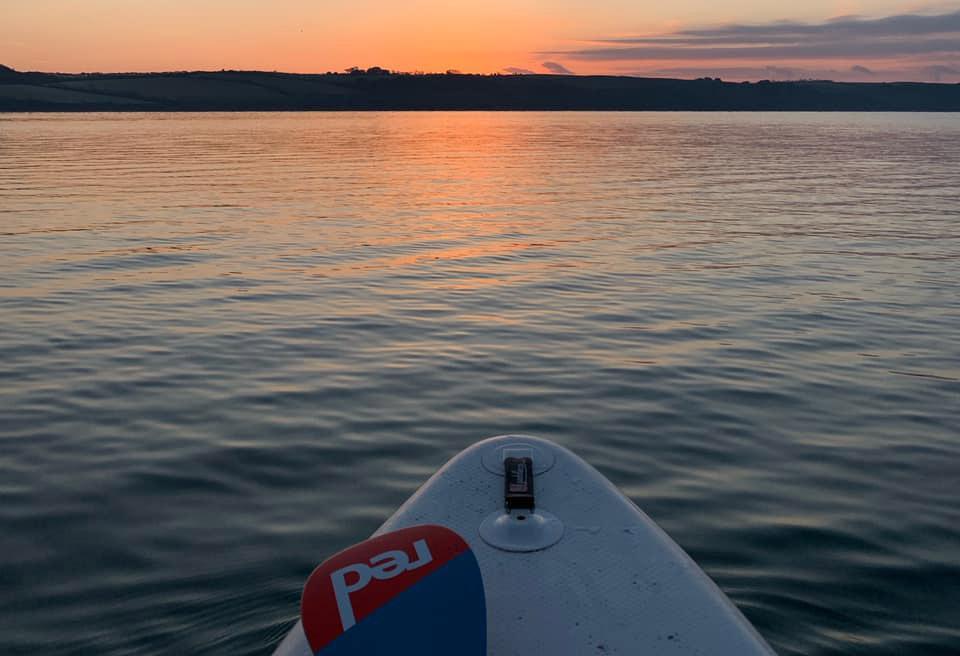
If you only paddle once in Cornwall and you’ve never done it before, make it here. Loe Beach at Feock is a small, lesser-known beach just outside Truro — in fact it’s the closest beach to Truro. It’s stony rather than sandy, so it doesn’t pull big crowds, but there are always paddleboarders and swimmers on the water. It sits where the River Fal meets the Carrick Roads, which means it’s sheltered nearly all the time.
Loe Beach Watersports is right on the beach and does board and kayak hire plus lessons, with a café attached. Rates and opening days shift with the season, so check before you drive over — outside high summer they often run weekends only.
Get your wetsuit on and launch. Float out into the bay past the summer moorings and it goes properly quiet. Green rolling hills, big old trees, rocky breaks, gentle ripples. From there you can work your way further up the River Fal or drift west along the headland and round the point, past waterside houses that’ll have you costing out a new life in Cornwall. And if you’re lucky, you might even spot a dolphin.
3. St Michael’s Mount and Marazion
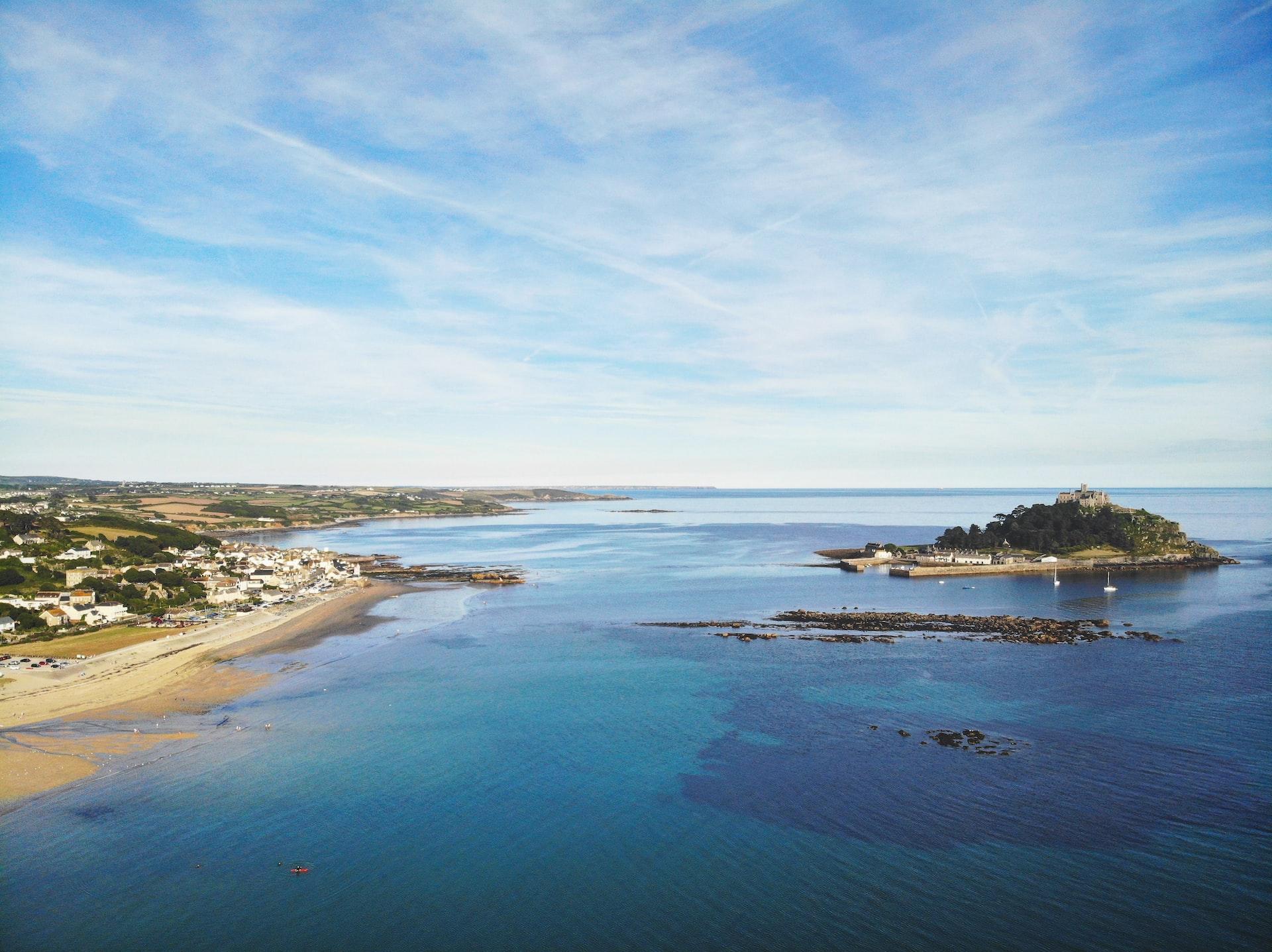
This is the one people put on the fridge. St Michael’s Mount sits just off the beach at Marazion, joined to the mainland by a causeway that appears at low tide, and the bay around it is regarded as one of the most beautiful in Britain.
The legends here are worth knowing before you go out. Sailors wrecked on the Mount were said to have been lured in by a mermaid’s call; others claimed an apparition of St Michael — the patron saint of fishermen — guided them safely to the western side of the island, where the castle entrance stands today.
Board hire is available from Ocean High, based at the Marazion beach car park, before you launch into water that suits pretty much all abilities. Paddle across the bay and you get the 14th-century castle from every angle — then land on the shore for an ice cream. There are few better backdrops for a SUP anywhere in the country.
4. The River Fowey
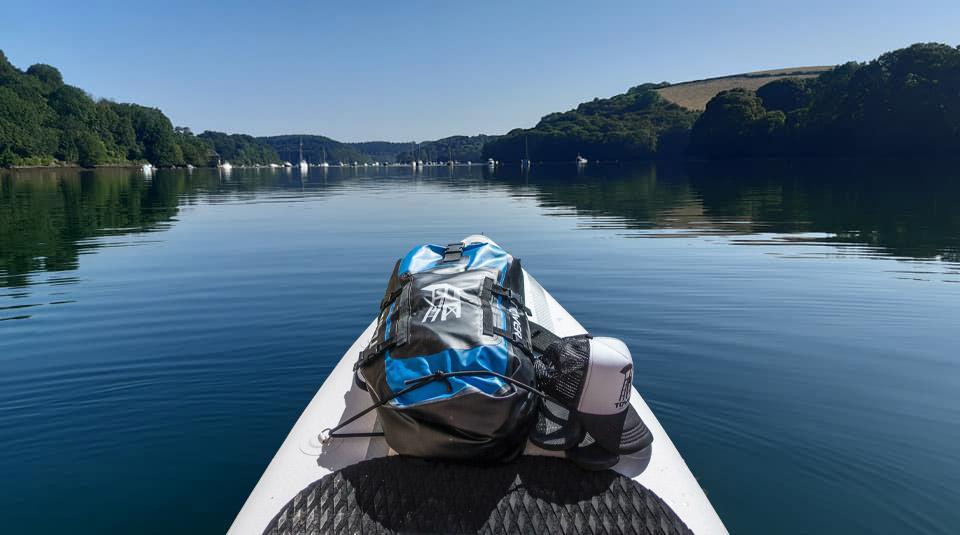
A paddle into an Area of Outstanding Natural Beauty. The Fowey runs from Lostwithiel down to the town of Fowey, where it meets the south coast, and it’s the best flat-water day out in Cornwall if you’ve got your own board.
Lostwithiel is a lovely place to put in — park at Coulson Park for direct access to the water, then drift downriver towards St Winnow through lush countryside teeming with birdlife. The river opens up more and more the closer you get to the sea.
No board of your own? Fowey River Hire is based at Albert Quay in Fowey and runs its guided kayak and SUP tours from Caffa Mill — worth a quick call to check which site your hire goes out from. At the time of writing they list SUP hire at around £35 for a half day and £50 for a full day. Alternatively you can start midway at Golant with Encounter Cornwall, who run beginner SUP sessions from The Boatshed (around £42 adult, £30 child), mostly March to September.
Whichever way you go, there’s a lot to see — shorebirds, flowering sea plants, rocky caves, and little sandy beaches you can only reach from the water.
5. Kynance Cove and the Lizard Peninsula
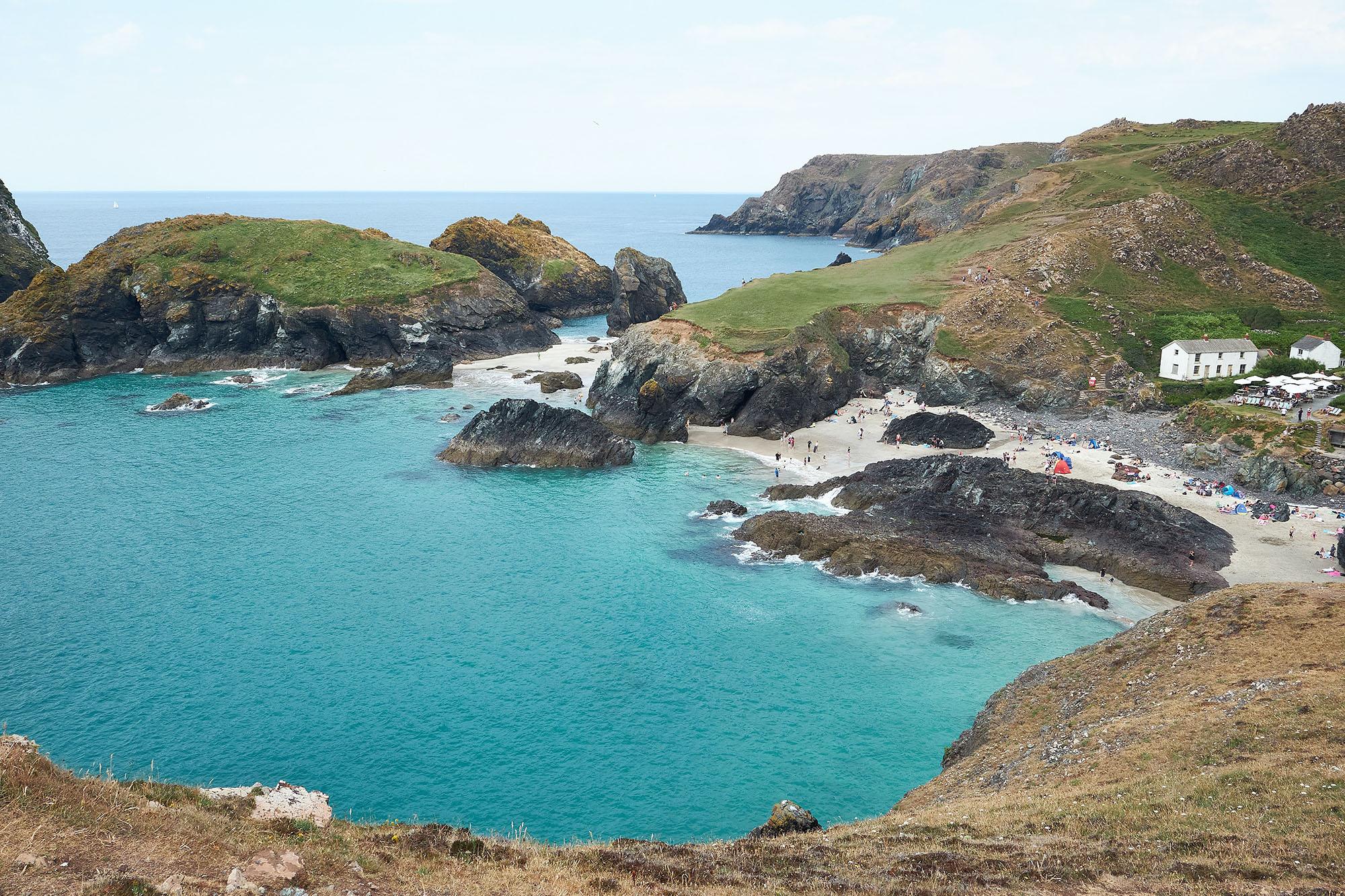
For a proper adventure — and I do mean for confident paddlers only — launch from one of the quiet beaches around the Lizard. You’ll get away from the busier spots entirely and chart your own course. Check the wind, swell and tide before you commit to anything here.
Kynance Cove is the spectacular one. At low tide it opens up into beaches, caves and the mermaid’s pools, and you can work your way down towards Pentreath Beach and on to the most southerly point on the UK mainland. Two things to plan around: the good stuff at Kynance is low-tide only, the beach itself can get cut off, and there are no lifeguards. And the National Trust car park is the only realistic parking — free for members, otherwise around £2 for an hour or £5 for four hours, payable by the JustPark app or coins, with no card machine. In peak season it closes when it’s full, so get there early.
Kynance also has its own dog restriction, and it’s a different window from Falmouth’s — dogs are off the beach 1 July to 31 August, 10am to 6pm.
Elsewhere on the peninsula, Mullion Cove, Porthkerris and Porthoustock all make good launches. Porthoustock was once a notoriously dangerous passage, infamous for shipwrecks, and is now full of marine life — birds, seals, and the occasional dolphin. If you’d rather go with someone who knows the water, MAKAI (formerly Lizard Adventure — same team, new name since joining the MAKAI group) run guided SUP sessions from Mullion Harbour or Cadgwith depending on conditions, from around £55 per person.
6. Porthleven Harbour
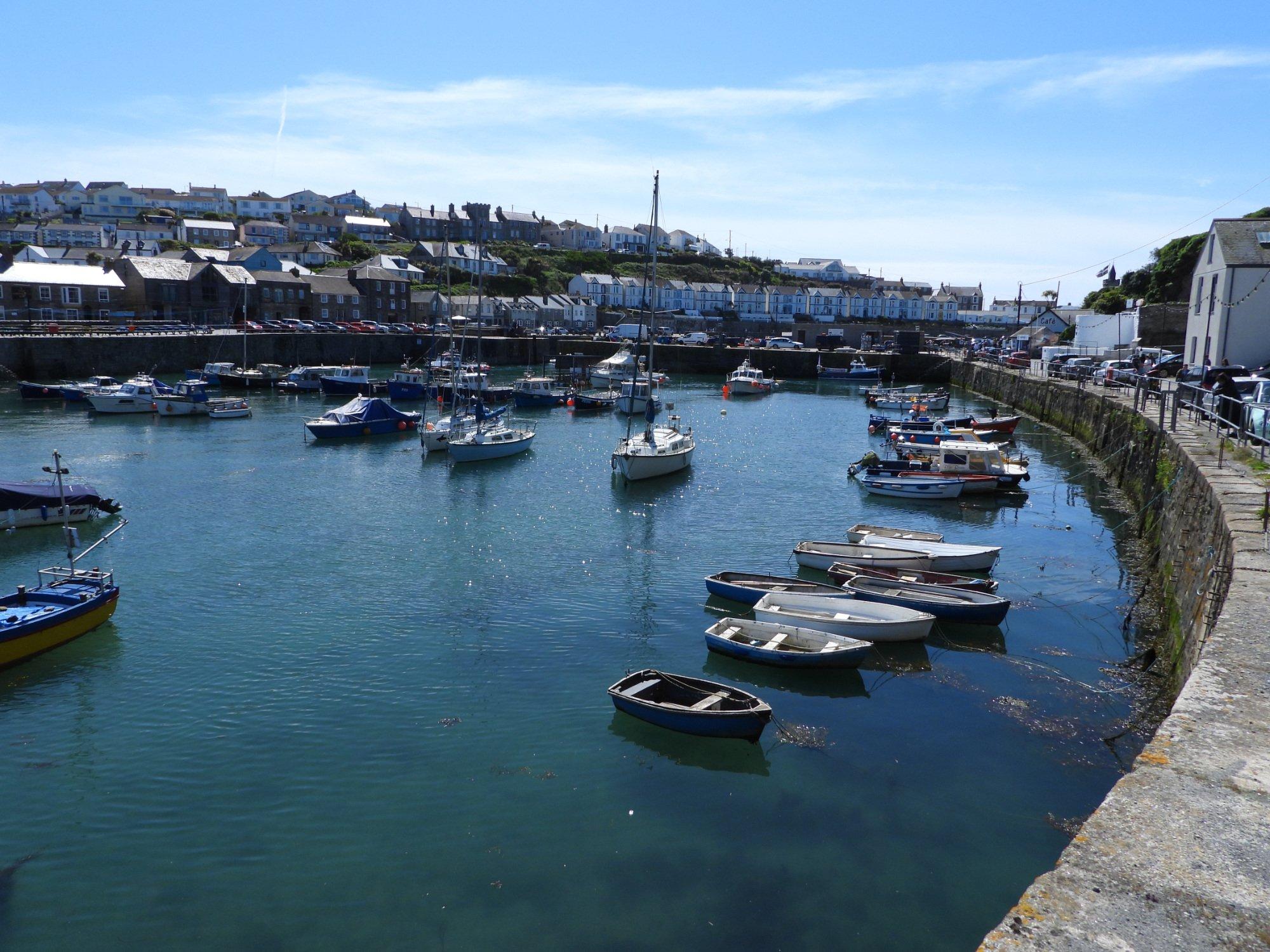
Porthleven has a reputation as one of the heaviest reef breaks in Britain, which makes it sound like the last place you’d take a paddleboard. Outside the harbour walls in winter, fair enough. Inside them on a calm summer morning, it’s a genuinely lovely and very sheltered place to learn.
The harbour is flat, contained, and ringed by that clocktower-and-cottages view everyone photographs. It’s a good spot to get comfortable before you take a board anywhere more open, and you’re a two-minute walk from a decent lunch when you’re done.
Vertical Blue Adventures operate right on the harbour and run harbour SUP sessions from around £30 per person, plus a guided SUP safari along the coast for people who already know what they’re doing. They also run British Canoeing SUP courses if you want an actual qualification out of your holiday.
One rule of thumb for Porthleven: if you can see waves hitting the pier, it’s a day for watching, not paddling.
7. Porthcurno Beach, West Cornwall
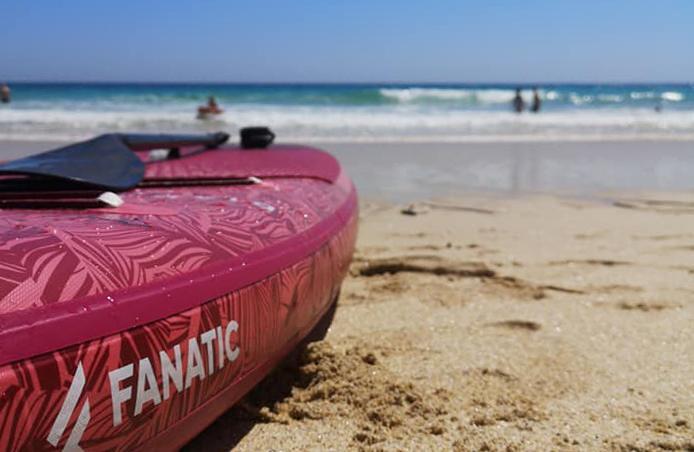
Paddling out at Porthcurno made me feel like Captain Jack Sparrow. It doesn’t look like anywhere else in the UK — soft white sand, clear turquoise water, sheltering cliffs. It’s remote, right down near Land’s End, which is exactly why it worked so well for smugglers back in the day.
Launch and take a moment to look up at the Minack Theatre carved into the cliffside above you. Then paddle across the bay to Pedn Vounder. At low tide the sandbars there are a cracking place to stop, and you’ll feel like you’ve got your own slice of island heaven.
From there, work along the coastline into the tiny hidden coves — most are only reachable from the water, so you won’t be sharing them. Bring a mask and snorkel if you’ve got room for it. There’s no hire on the beach, so arrive with a board.
8. The Gannel, Newquay and Crantock
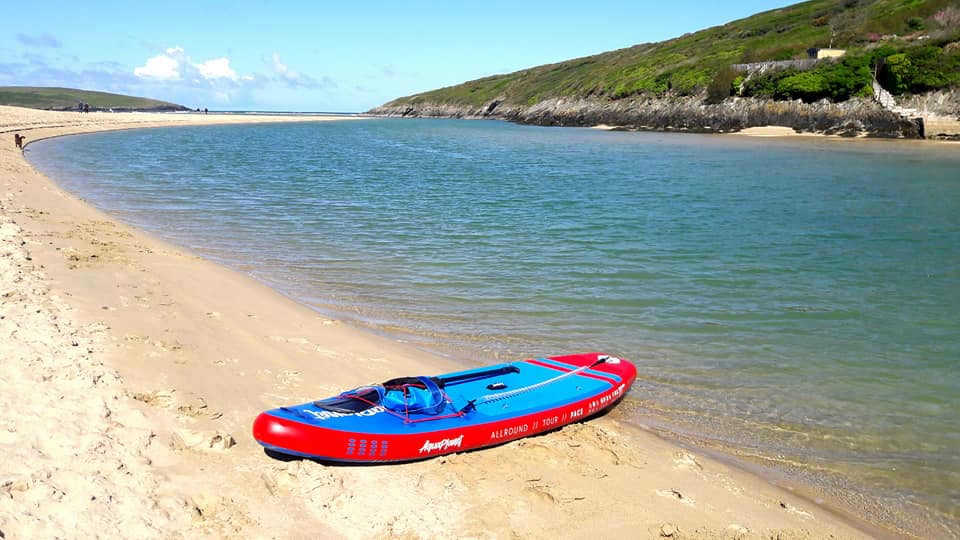
The Gannel is a favourite with paddleboarders of every level, and it’s right next to Newquay, which is home to every kind of watersports fanatic going.
Crantock beach sits just outside town, which gives you a choice of where to launch. The estuary is tidal, so the landscape genuinely changes through the day, but it stays calm and it’s an ideal place to find your balance. There are plenty of entry points along the river, including the National Trust car park at Crantock.
Paddle the stretch from the edge of Newquay down to Crantock beach and you get countryside, marshland and birdsong on one side and rippling blue water and white sand on the other. If it’s calm out at sea, you can carry on down the beach and out into open water.
For hire and guiding, Big Green Adventures (formerly Big Green Surf School) are the National Trust’s provider at Crantock Beach and run two-hour group SUP tours on the Gannel from around £48 per person. Newquay Activity Centre run estuary and ocean SUP tours from around £65 per person, and Newquay Watersports Centre do straight board hire from the harbour from around £15 an hour, daily from 1 April to 1 October.
9. The Camel Estuary, Near Padstow
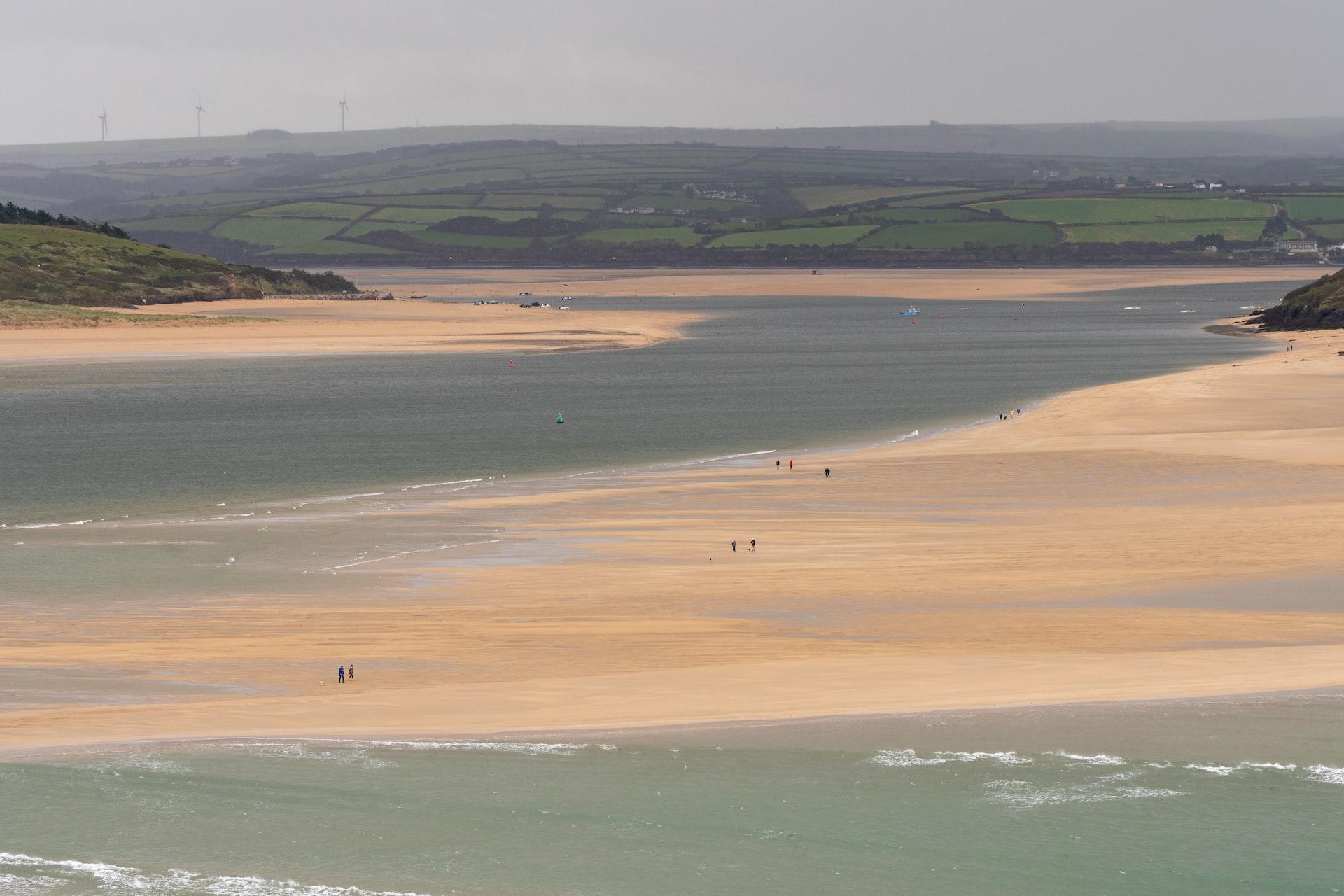
The Camel Estuary near Padstow is the family choice. Calm turquoise water, big views, and enough going on that nobody gets bored. It’s home to seals, dolphins and porpoises, and it’s a serious birdwatching spot on top of that.
Last time I was out I put in at Dennis Cove and set off downstream to Padstow. If you’ve got the energy, keep going through the moored boats to St George’s Cove and Rock beach. The water changes completely as the tide runs in and out — at lower tide you can paddle to the middle of the estuary and stop to rest on the sandbars, which is about as good as a lunch break gets.
For hire and lessons, Camel Ski School at the pontoon in Rock run pay-and-play SUP sessions from around £28 per person and lessons from around £44, with a season running roughly March to November. Over on the north side, Harlyn Surf School at Harlyn Bay do lessons and guided tours year-round (around £55 per person in a group) and self-hire from around £15 an hour.
10. Helford Passage, on the Helford River
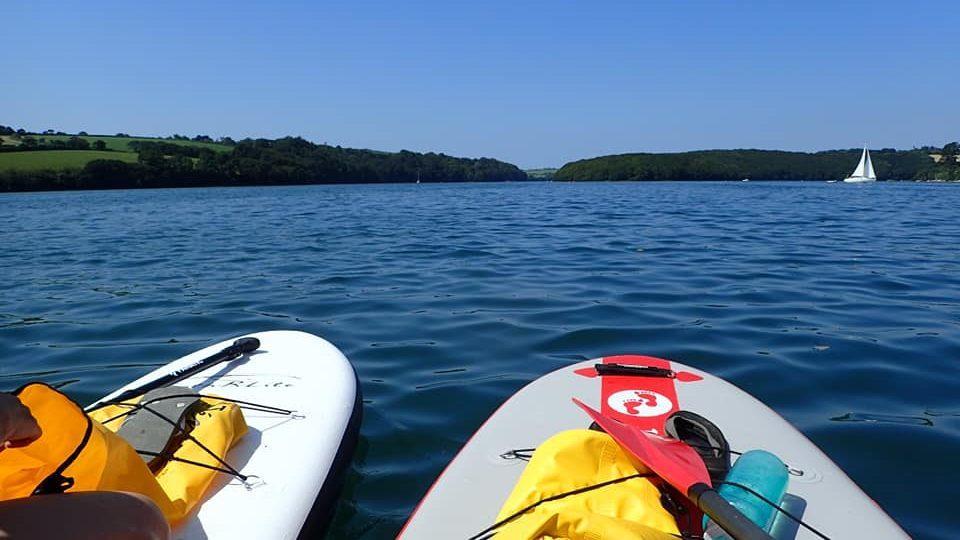
Tucked into south west Cornwall between Falmouth and the Lizard, Helford Passage sits on the Helford River in another Area of Outstanding Natural Beauty. You can get on the water here and lose a whole afternoon without noticing. There’s a small sandy beach in the village, good for swimming and sunbathing as well as launching.
It’s a brilliant spot for first-timers on the right day, though it can get choppy, so check the forecast. Woodland lines the water’s edge and runs into hidden creeks and beaches you can nose into. There’s birdlife and sealife everywhere, and given enough time you can work out past the moorings towards the sea.
Despite being a tiny village, there is hire here — Helford River Boats hire SUPs at Helford Passage, seasonally from 1 April to 31 October (01326 250770). Rates aren’t always current on the site, so it’s worth a ring first. Otherwise, pick your kit up on the way through Falmouth.
11. Sennen Cove, Near Land’s End
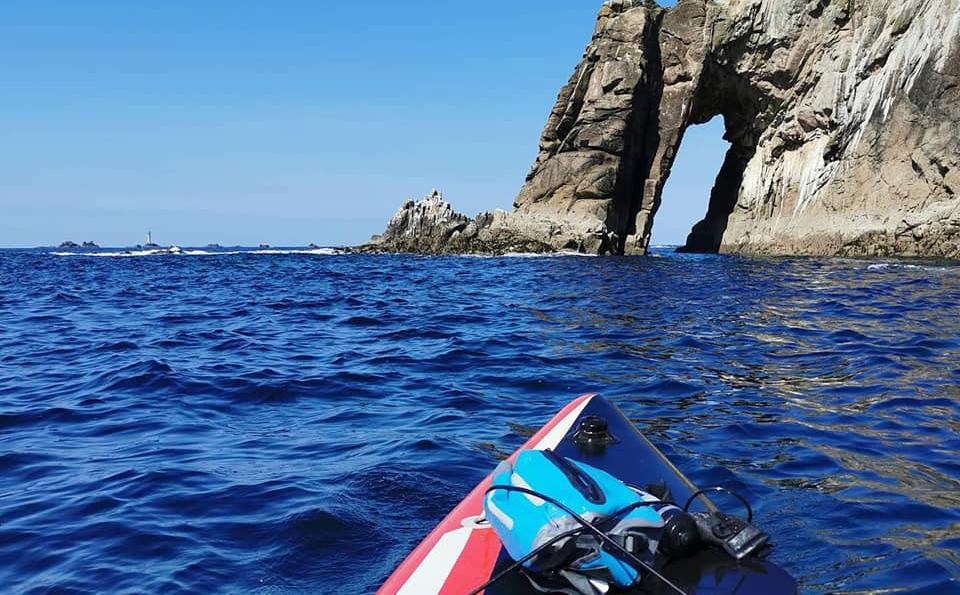
I’ll be straight with you: Sennen Cove wouldn’t be my first pick if you want guaranteed paddleboarding conditions. This fishing village sits right by Land’s End and takes the full force of the Atlantic, so it can get properly choppy. But wait for a flat day and check the surf forecast twice, and it’s a cracking spot.
Start by cruising round to Gwynver to find your feet. Then get more ambitious and head south towards Land’s End, minding the rocks and craning up at some genuinely enormous cliffs.
Along that stretch of coast is the wreck of the RMS Mülheim, a German cargo ship that ran aground in Gamper Bay on 22 March 2003 carrying scrap plastic from Cork to Lübeck. What’s left of her is a corroded remnant below Mayon Cliff, on the coast path between Sennen Cove and Land’s End rather than at the cove itself. Don’t try to get close on a board — the rocks around it are unforgiving and it’ll teach you more about the power of the Atlantic than you wanted to learn.
12. St Ives Bay
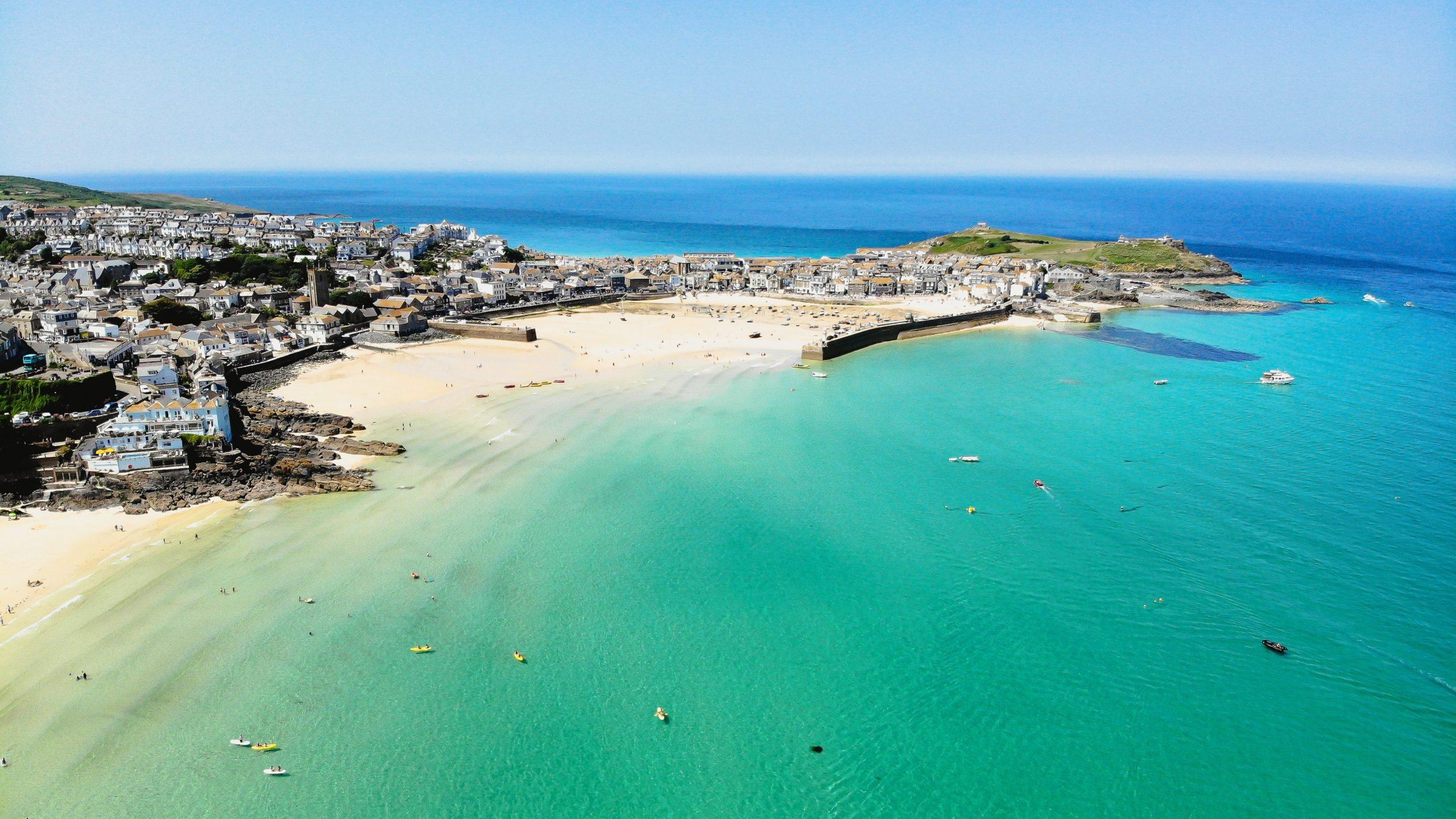
St Ives Bay is the best of the north coast for paddling. Conditions on this side can be rough, but the bay gives you dozens of different launch points and the headlands usually keep something calm and turquoise going somewhere.
From St Ives town, the town beaches — Porthgwidden and Porthminster — tend to offer the flattest water. St Ives Surf School run beginner SUP lessons and guided tours from around £47 per person; ring ahead to confirm which beach they’re meeting on, as it varies.
Further round the bay is Gwithian and the Towans, which is one of my favourite beaches in Cornwall full stop. Miles of dunes, quiet soft sand, and Godrevy lighthouse sitting out there as a backdrop. There’s cliffside parking at Gwithian and a National Trust site on the beachfront. Gwithian Academy of Surfing — their website is surfacademy.co.uk, which catches people out — do SUP hire and lessons on the beach.
My best tip here: on a clear, calm evening, do a sunset session. Paddle into the sunset as the sky goes red behind St Ives Head. Hard to beat.
Do You Need a Licence to Paddleboard in Cornwall?
No — not for the sea, and not for Cornwall’s tidal estuaries. Coastal water and tidal estuaries like the Camel, the Fal, the Helford and the Gannel are covered by the public right of navigation, so you can launch and paddle without paying anyone anything. That covers every spot on this page.
Where you do need a licence is non-tidal inland water — rivers and canals managed by the Environment Agency, the Canal & River Trust or a similar navigation authority. If you’re planning to paddle inland anywhere in the UK, you’ll want either a Paddle UK waterways licence or a day licence from the relevant authority. Paddling those waters without one can land you a fine of up to £1,000.
Worth saying clearly, because there’s a lot of confusion about it: a leash is not a legal requirement anywhere in the UK. It is, however, very strongly advised — see below.
Paddleboarding Safely in Cornwall: What Actually Matters
Cornwall is a brilliant place to paddle and a genuinely serious bit of coastline. A few things the RNLI and Paddle UK bang the drum about, and they’re worth taking seriously:
- Offshore wind is the number one cause of SUP rescues. A board is basically a sail. If the wind is blowing off the land it will take you out to sea faster than you can paddle back, and it’ll feel deceptively calm while it does it. Check the wind direction, not just the wind speed.
- Wear the right leash for the water. An ankle leash at sea and on open water; a quick-release waist leash on rivers and anywhere with moving tidal flow, where an ankle leash can snag you.
- Check the tide. Cornish estuaries empty and fill dramatically, and a spot that was two metres deep on the way out can be mud on the way back.
- Carry a way to call for help in a waterproof pouch, and tell someone where you’re going and when you’ll be back.
- If you get into trouble, stay with your board. It floats, it’s bright, and it’s the thing a lifeboat crew will spot.
Where to Hire a Paddleboard in Cornwall
Through the summer, roughly May to September, you’ll find SUP hire at most busy beaches and popular paddle spots. The bigger towns — Falmouth, Newquay, St Ives, Padstow — all have local outfits doing rental, lessons and guided tours. Prices below were correct at the time of writing; always check before you book, and ring ahead outside high summer, when a lot of these run reduced days.
- Loe Beach Watersports — Loe Beach, Feock, near Truro. Hire and lessons.
- Ocean High — Marazion, under St Michael’s Mount.
- Fowey River Hire — Fowey. From around £35 a half day.
- Encounter Cornwall — Golant, River Fowey. Sessions from around £42.
- Big Green Adventures — Crantock and the Gannel. Group tours from around £48.
- Newquay Activity Centre — Newquay, ocean and estuary tours from around £65.
- Newquay Watersports Centre — Newquay Harbour. Hire from around £15 an hour, 1 April to 1 October.
- Camel Ski School — Rock, Camel Estuary. Pay and play from around £28. Season roughly March to November.
- Harlyn Surf School — Harlyn Bay, near Padstow. Lessons year-round from around £55; hire from around £15 an hour.
- St Ives Surf School — St Ives. Beginner lessons from around £47.
- Gwithian Academy of Surfing — Gwithian Towans, Hayle.
- MAKAI — the Lizard, launching from Mullion or Cadgwith. Group sessions from around £55.
- Vertical Blue Adventures — Porthleven Harbour. Harbour sessions from around £30.
- Helford River Boats — Helford Passage. Seasonal, 1 April to 31 October.
- Boatshed Activity Centre — Praa Sands.
Paddleboarding in Cornwall: Common Questions
When is the best time of year to paddleboard in Cornwall?
May to September is the sweet spot — that’s when the sea is warmest, most hire centres are open, and the settled weather makes flat days more likely. September is arguably the best of the lot: the water is at its warmest after a summer of sun, and the crowds have gone. With a decent wetsuit you can paddle the sheltered estuaries year-round, and several operators now run through the winter.
Where’s the best place to paddleboard in Cornwall for beginners?
Loe Beach at Feock, near Truro. It’s sheltered where the Fal meets the Carrick Roads, the water is shallow and calm, and there’s hire and tuition right on the beach. The Gannel at Crantock and the Camel Estuary at Rock are the next best options, both with lessons on site.
North coast or south coast for paddleboarding?
South coast, most of the time. It’s more sheltered, the estuaries run deeper inland, and calm days are far more common. The north coast is exposed to Atlantic swell — it’s absolutely paddleable at places like St Ives Bay, Sennen and Perranporth on a flat day, but those are big surf beaches for a reason, and getting a large board out beyond the break is hard work.
Can you paddleboard in Cornwall without hiring a guide?
Yes, and most people do. No licence is needed on the sea or the tidal estuaries, and self-hire is available at most of the spots above. If it’s your first time, an hour of tuition is money well spent — mainly because a good instructor will teach you to read the wind and tide, which is the part that actually keeps you safe.
Final Thoughts
Honestly, you can paddle almost anywhere around the Cornish coast and waterways — the best spot on any given day comes down to weather and sea conditions more than anything on a list. As a rule, the calmest water is on the south coast or further up the estuaries.
Check the forecast, wear a leash, tell someone where you’re going, and go and enjoy it. If you’re still working out where to base yourself, our guide to where to stay in Cornwall breaks the county down by trip type. See ya out there.
Introducing Eliot, the Editor here and Cornwall local with a wanderlust spirit and an insatiable appetite for adventure. With a passion for the great outdoors, he can often be found catching waves on his surfboard, scaling peaks on a hiking trail, or discovering hidden gems in his exploration of Cornwall.