
Cornwall’s got over 300 beaches and a fraction of them are any good to surf. The rest are lovely for a sandwich and a paddle, which is a different thing entirely. I’ve surfed most of the county’s coast over the years — badly, in the case of a couple of these — so here’s the honest version: which beaches actually work, who they suit, and the two pieces of local knowledge that matter more than any single wave description.
This isn’t a countdown. It’s organised the way I’d actually explain it to a mate turning up with a board and no clue where to point the car.
How to read a Cornish surf forecast
Three numbers matter before you drive anywhere: swell height, swell period, and wind direction. Swell height is roughly the wave face you’ll get (a 3ft forecast doesn’t mean a flat sea — it means rideable). Swell period is the gap in seconds between waves — anything under 8 seconds is usually weak wind-swell and mushy, 10-14 seconds is a proper groundswell with power behind it, and anything past 15 seconds is a big, long-travelled swell that’ll be bigger and more powerful than the height alone suggests.
Wind is the one people ignore and shouldn’t. Onshore wind (blowing from sea to land) chops the wave face up and makes everything worse the stronger it gets. Offshore wind (blowing from land to sea) holds the wave face up and can turn a mediocre swell into something genuinely good. Cornwall’s north coast wants an easterly or south-easterly to be offshore; the south coast wants a northerly. Check whichever surf forecast site you use (Magicseaweed, Surfline, Surf-Forecast all cover Cornwall well) for both swell and wind before you commit to a drive — a beach an hour away with offshore wind beats one five minutes away getting blown to bits.
North coast vs south coast — the one thing every visitor gets wrong
This is the single most useful thing a local knows and almost nobody writes down: Cornwall’s north coast faces the open Atlantic and picks up swell constantly — it’s exposed, it’s consistent, and on a big day it can get properly heavy. The south coast, facing the English Channel, is sheltered by comparison and only really works when there’s a proper groundswell running, or when the north coast is too big and blown-out to surf safely.
In practice: check the north coast first. If it’s too big, too messy, or the wind’s wrong, that’s when Praa Sands or Porthleven on the south coast are worth the drive — they’re the overflow valve, not the first choice. Locals treat the south coast as a “when the good stuff’s unsurfable” option, and that’s exactly how to use this guide.
When to go
Autumn and winter bring the biggest, most consistent swell — October through February is genuinely the best surfing of the year here, it’s just cold and the days are short. Spring is a mixed bag. Summer is the smallest and most crowded swell window of the year, but the water’s warmest and it’s when most of the surf schools run daily lessons, so it’s the easiest time to learn even if it’s not the best time to actually surf well. If you’re weighing up a September trip specifically, our September guide covers why it’s often the sweet spot — the swell’s picking back up and the crowds have thinned right out.
Beginners: where to learn, and where not to
If it’s your first time on a board, go to a beach with a lifeguard-patrolled surf school and a gentle, sandy beach break — Polzeath, Watergate Bay, and Porthtowan in the right conditions are the classic learner spots. Do not take a first-timer to Porthleven (reef, expert-only, genuinely dangerous), Constantine Bay’s southern end (reef and heavy shorebreak), or any beach on a big winter swell day regardless of its usual reputation. Rip currents are the real hazard on every beach in this guide, not sharks or cold water — they’re the fast channels of water pulling back out to sea, usually near rocks, headlands, or river mouths. If you’re caught in one, don’t fight it: swim parallel to the beach until you’re out of it, then head in.
Always surf between the red-and-yellow flags on a lifeguarded beach. RNLI lifeguards patrol most of Cornwall’s surf beaches from the Easter holidays through to late October, with daily cover through the school summer holidays and reduced weekend-only cover either side — exact dates shift beach to beach and year to year, so check RNLI’s beach finder before you go, especially outside peak summer.
North coast surf beaches
Bude down to St Ives — this stretch takes the full force of the Atlantic and is where most of Cornwall’s genuinely reliable surf lives.
Summerleaze Beach, Bude
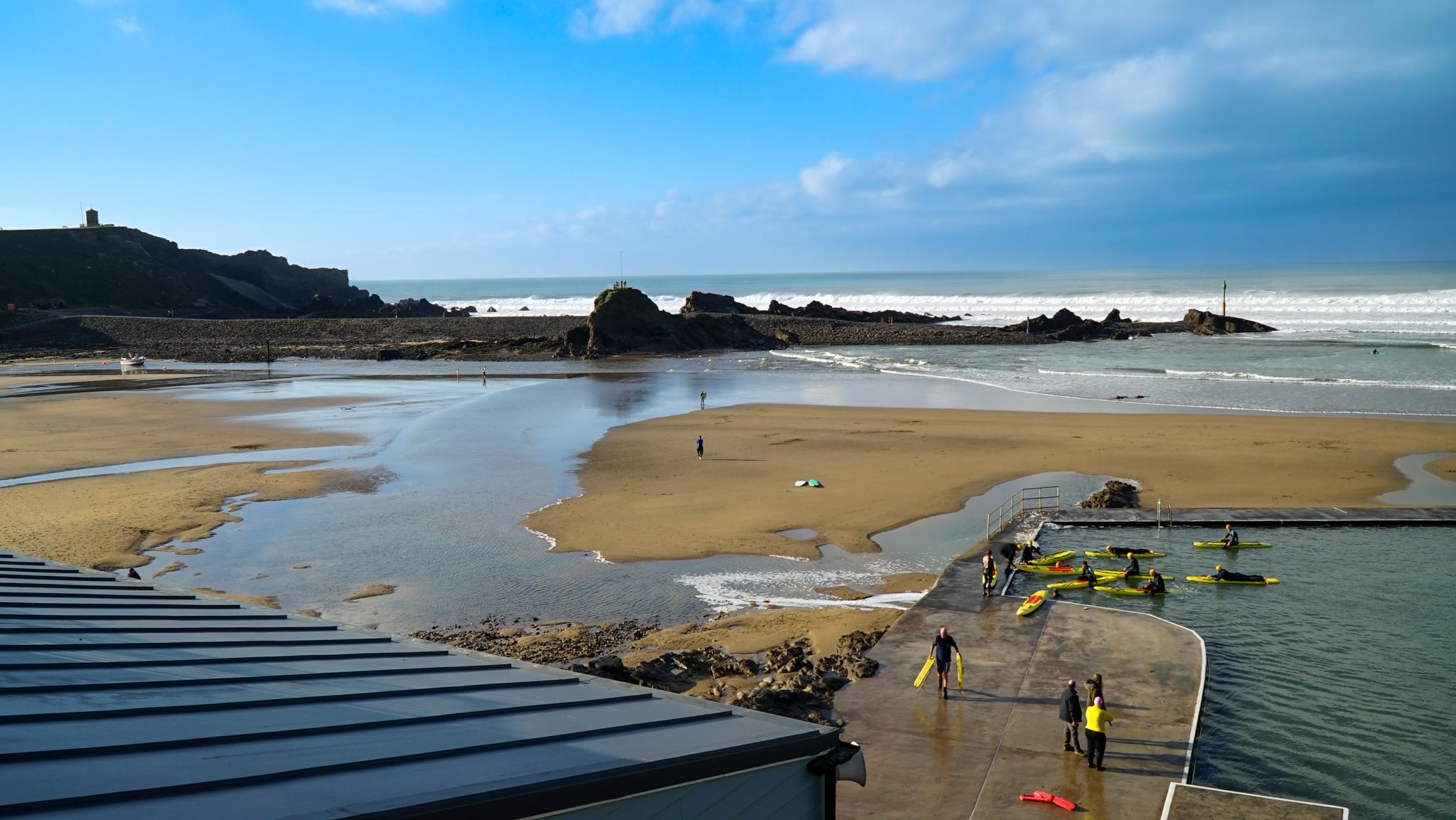
Right up near the Devon border, Summerleaze is a solid, consistent beach break that suits improvers and intermediates best — beginners can learn here too, but need to know exactly where the hazard sits.
- Best conditions: mid tide, light easterly offshore wind
- Watch for: a genuine rip current forms near the river/harbour mouth and around the gap between Barrel Rock and Cross Rock — strongest at mid-to-low tide, and it gets busy in summer right where the rip runs
- Parking: Summerleaze car park, a short walk from the beach
- Lifeguards & lessons: RNLI seasonal patrol; several surf hire and lesson operators in Bude itself, a two-minute walk away
Honest local detail: the tidal sea pool at the north end is your backup when the surf’s rubbish — flat, safe, and a proper Cornish institution.
Constantine Bay
Near Padstow, Constantine is really three spots in one, which is why it’s one of the most-cited beaches by surfers who actually live here — and it’s a genuine gap in the old version of this guide.
- Best conditions: the main beach works well at high tide with clean lefts and rights; summer (May–Sept) brings smaller, more forgiving waves
- Skill level: the main beach suits beginners to intermediates in summer; the southern reef, The Slab, is experts only — heavy, hollow, and works best mid-to-high tide
- Watch for: reef, heavy shorebreak, and strong rips in bigger conditions — not a beach to underestimate because the main break looks friendly
- Lifeguards & lessons: Constantine Bay Surf School runs beginner-through-advanced lessons on-site; lifeguard cover is seasonal — check current dates before relying on it
Honest local detail: it works pretty much year-round, which is rare on this coast — worth the detour even when other spots are having an off day.
Watergate Bay
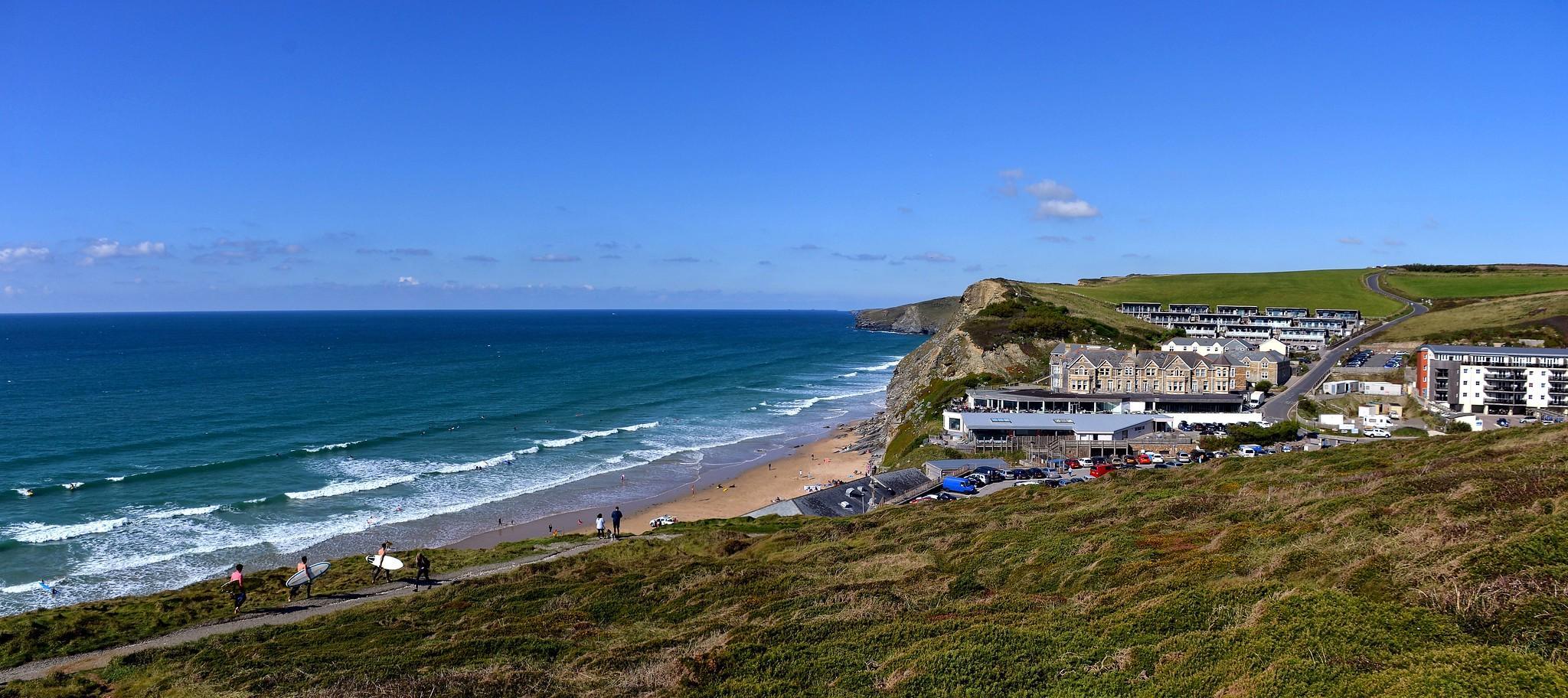
Two miles of sand near Newquay, and a genuinely good beginner-to-intermediate beach break — just not an unsupervised one.
- Best conditions: mid-to-high tide; low tide exposes rip channels between the sandbanks
- Watch for: strong rips, worse at low tide — stick to the lifeguard-flagged zone
- Parking: large pay-and-display car park by Watergate Bay Hotel
- Lifeguards & lessons: RNLI patrol April–October with a marked surfing area; Wavehunters at the Extreme Academy runs lessons and hire right on the beach, 7 days a week
Honest local detail: Watergate Bay is the Boardmasters music festival site each August — the actual surf competitions run down the coast at Fistral, not here, whatever you might have read.
Fistral Beach, Newquay
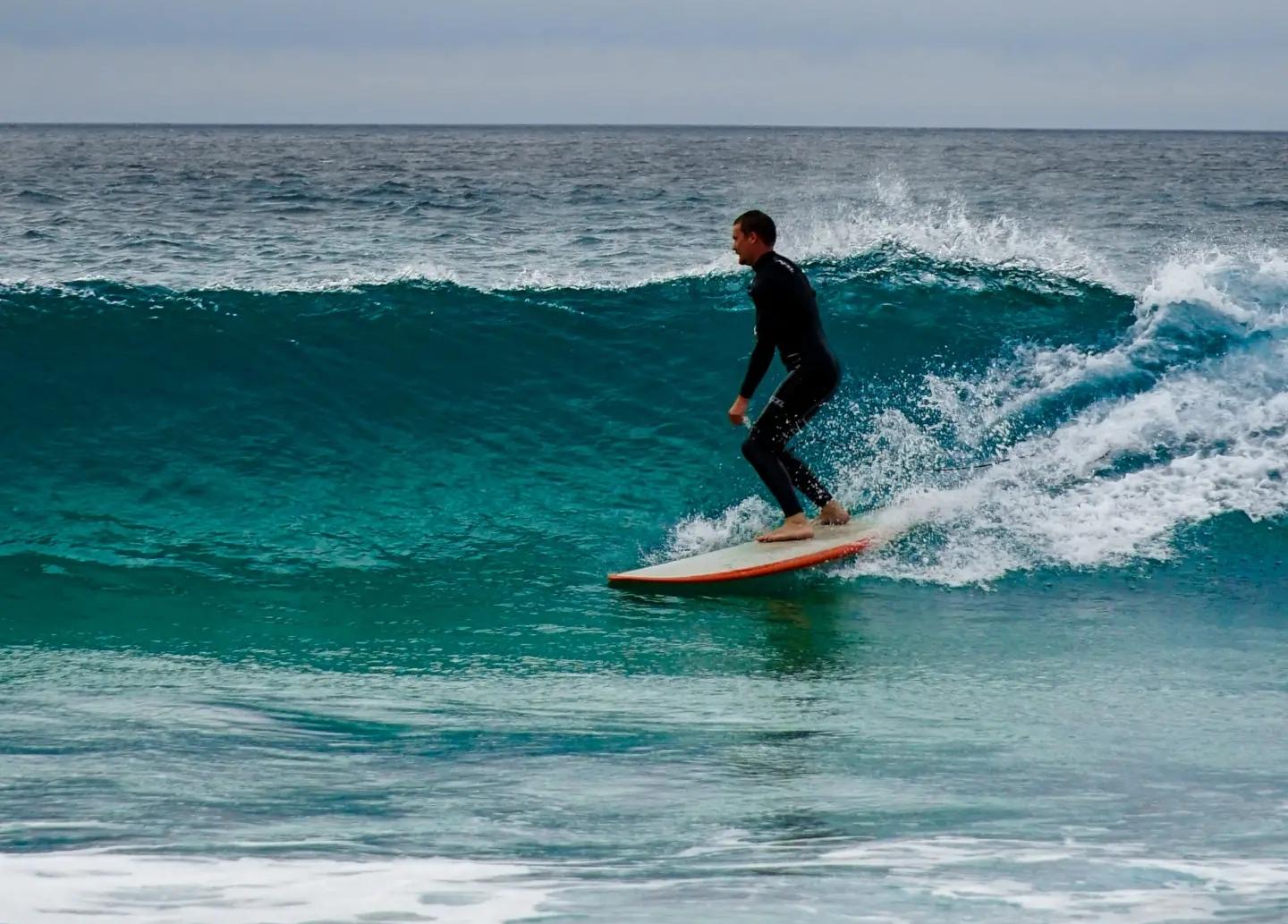
Fistral calls itself the home of British surfing, and the claim holds up — it’s the most exposed, most consistent beach in the county, which is exactly why it’s also the busiest lineup in Cornwall on a good day.
- Skill level: works for all levels depending on the day and which part of the beach you’re on; the Cribbar, a reef further out, only breaks on huge swells and is experts only
- Best conditions: most tides work here, which is part of why it’s so reliable; light offshore wind sharpens it up
- Parking: Fistral Beach car park — fills early on a good day in summer, get there for first light if you want a space
- Lifeguards & lessons: RNLI seasonal patrol; Fistral Beach Surf School at the International Surfing Centre runs lessons year-round
Honest local detail: it’s the most photographed lineup in Cornwall, and locals often surf somewhere else on a genuinely good day specifically to dodge the Fistral crowd. It’s also where Boardmasters’ actual surf competitions run each August, not Watergate Bay.
Perranporth Beach
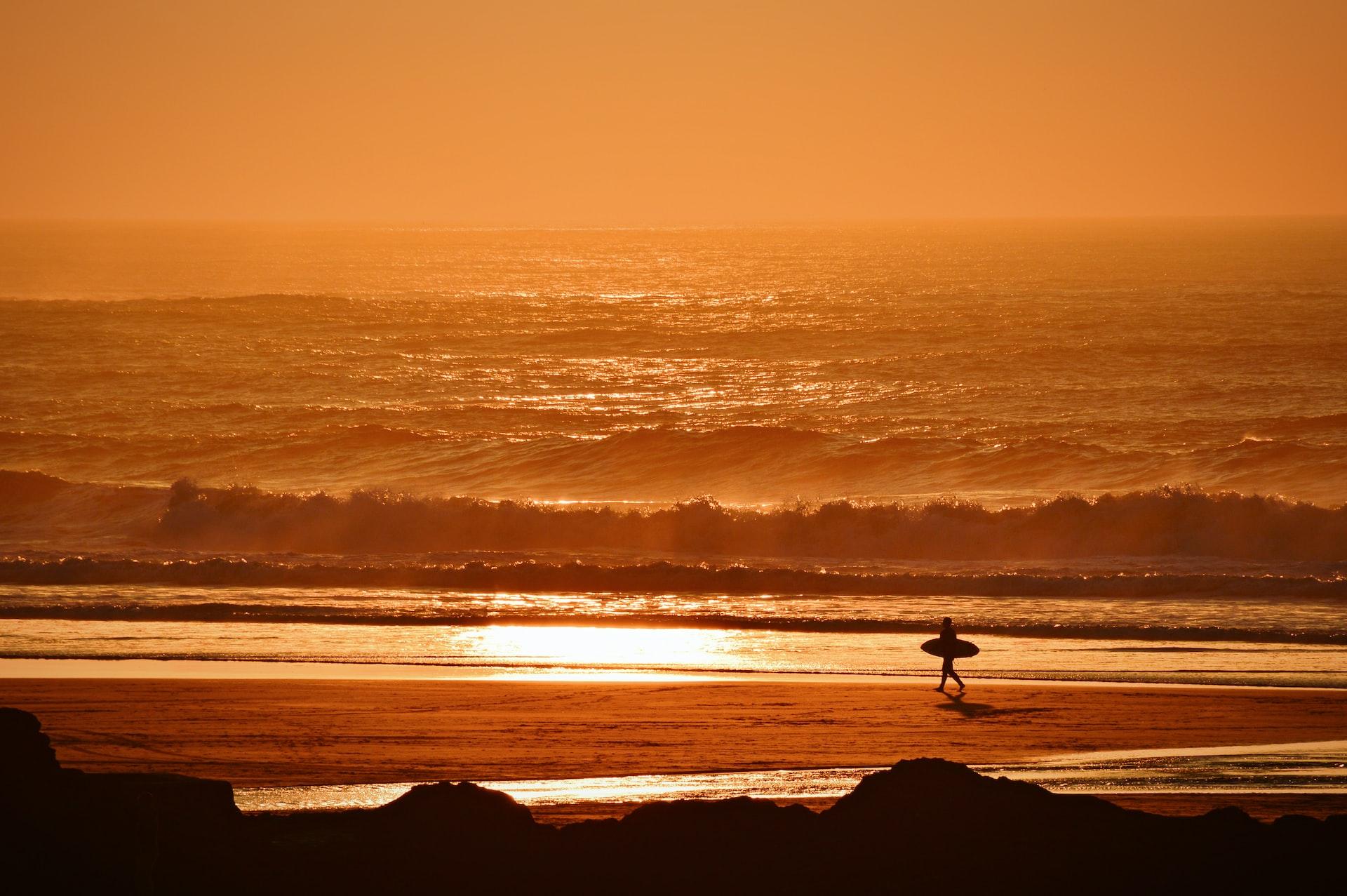
Over three kilometres of sand, with room to spread out even when it’s busy. Read the full Perranporth guide for the wider beach beyond the surf.
- Skill level: beginner-friendly beach break through most of the main stretch; the southern end holds bigger, more powerful waves for intermediates and advanced surfers
- Best conditions: low-to-mid tide, light easterly offshore
- Watch for: Perranporth has a genuine rip current reputation — stay inside the flagged zone and take the lifeguards’ word for it
- Lifeguards & lessons: RNLI seasonal patrol; Perranporth Surf School, Stoked Surf School, and The Watering Hole Surf School all operate on the beach
Honest local detail: it’s one of the few beaches here big enough that even on a packed August day, you’re only really competing with other surfers, not sunbathers.
Porthtowan Beach
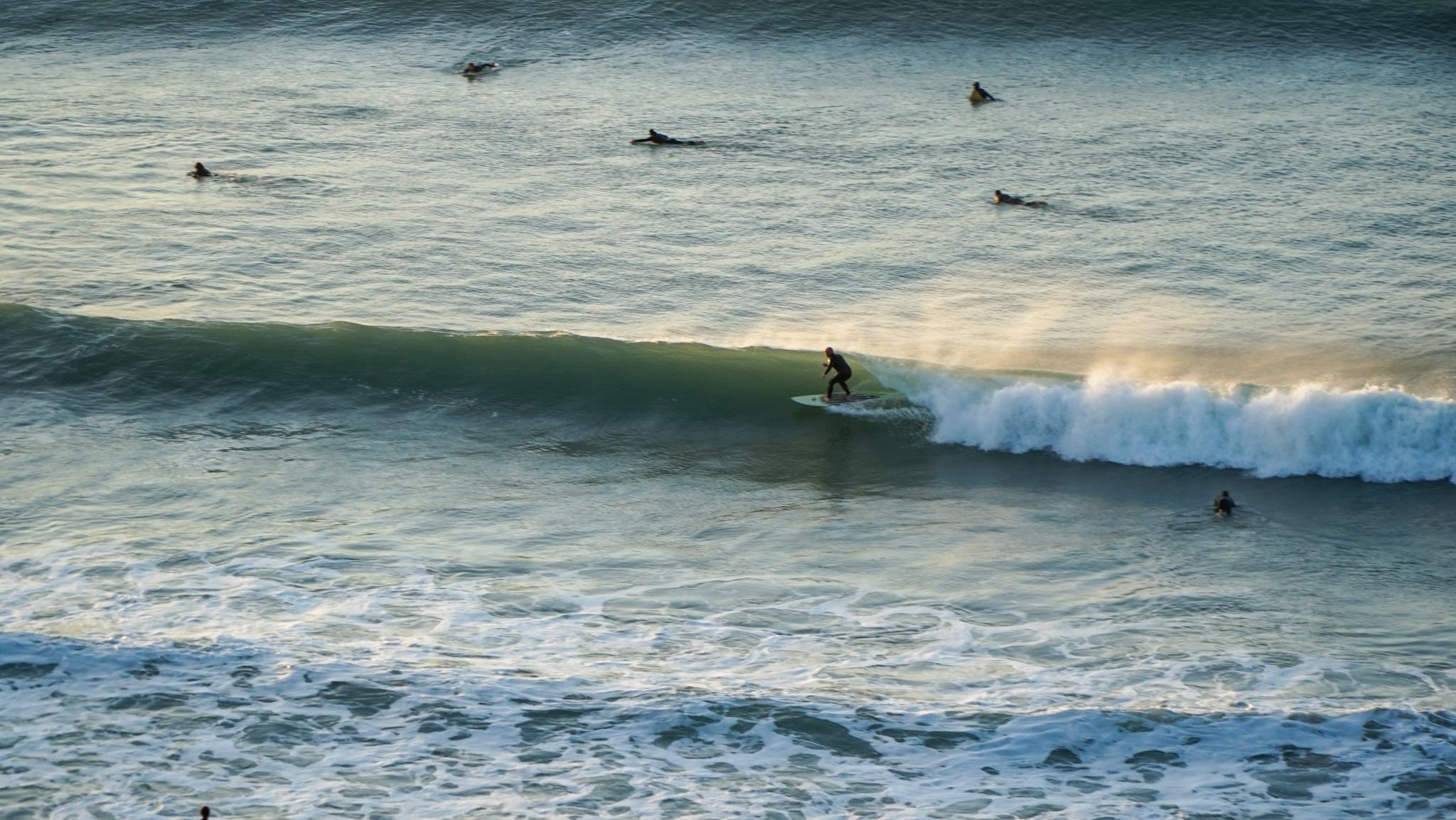
West-facing and fully exposed to incoming Atlantic swell, which makes it one of the more consistent beaches on this stretch.
- Skill level: better for beginners in summer, when the swell’s smaller and gentler; winter brings bigger, more powerful waves better suited to experienced surfers
- Best conditions: 2-6ft swell in the sweet spot; light easterly offshore keeps it clean; low-to-mid tide
- Lifeguards & lessons: RNLI seasonal patrol; Eskinzo Surf School (The Cornish Surf Company) runs lessons with RLSS-qualified beach lifeguards as coaches
Honest local detail: at low tide you can walk south along the sand to Chapel Porth — time it against the tide table or you’ll get cut off by the rising water on the way back.
Gwithian Beach
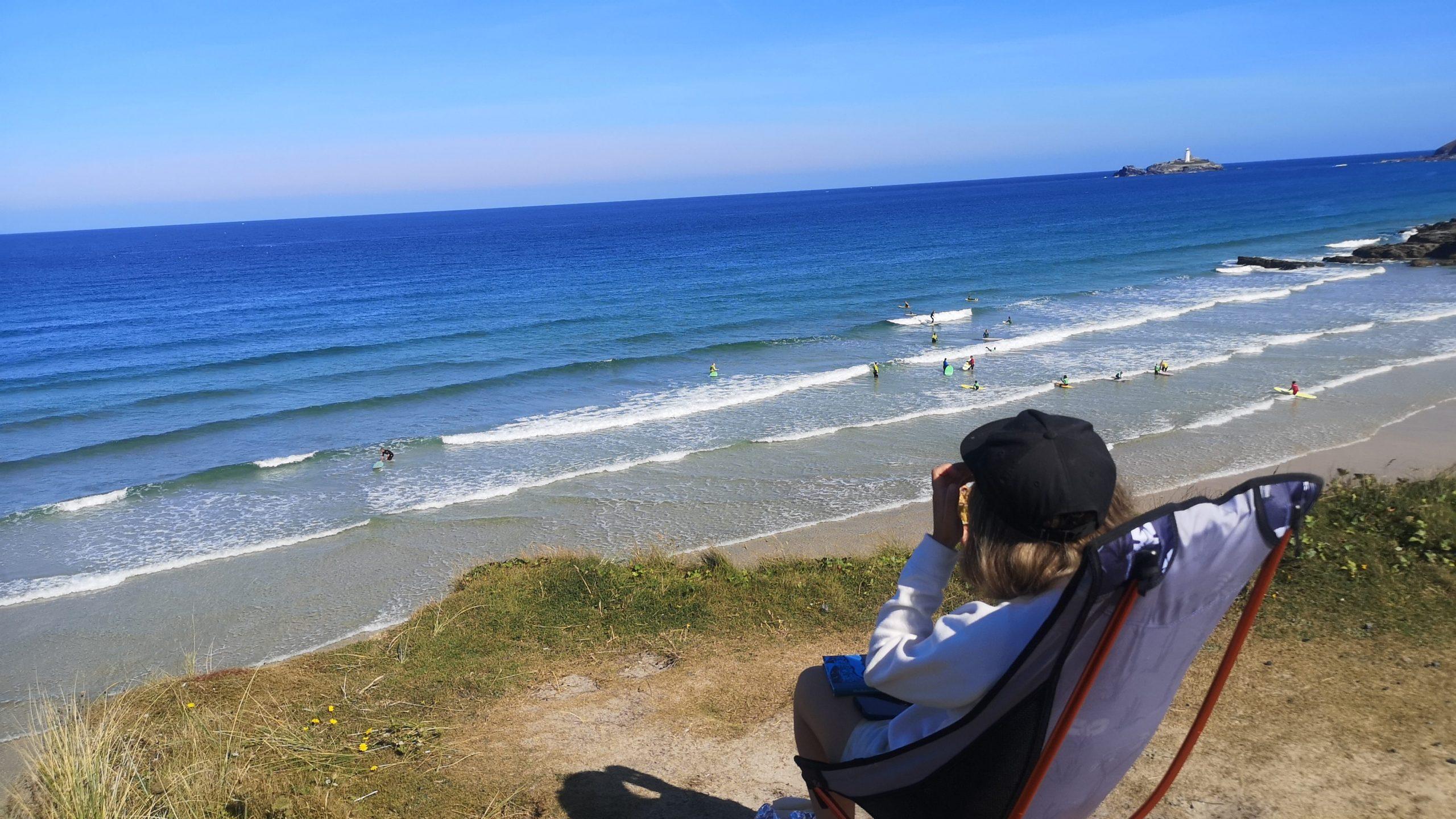
Nearly two kilometres of sand and dunes on St Ives Bay, easy-access with a long-stay car park right by it.
- Skill level: good for all abilities, with the surf tending to be better toward the northern end
- Watch for: rip currents, especially at low tide — swim within the lifeguard-flagged zone when it’s in force, which isn’t year-round
- Parking: long-stay car park near the beach, plus a motorhome-friendly campsite close by
- Lifeguards & lessons: RNLI seasonal cover, roughly Easter through to late October with reduced days either side of peak summer; hire shops near the car park
Honest local detail: Gwithian and Godrevy are effectively the same stretch of sand with different personalities — Gwithian’s the busier, more family end.
Godrevy
The quieter northern continuation of Gwithian, backed by National Trust land and that famous lighthouse view.
- Skill level: intermediate and above — a more exposed beach break with rip channels near the Red River mouth and rocks around Godrevy Point
- Best conditions: mid tide, light offshore
- Parking: National Trust Godrevy car park (charges apply, free for NT members)
- Lifeguards: patchier cover than neighbouring Gwithian — check current flags before you go, don’t assume
Honest local detail: same swell as Gwithian, a fraction of the footfall — the trade-off is you’re more on your own if something goes wrong, so this isn’t the spot to push your limits solo.
Porthmeor Beach, St Ives
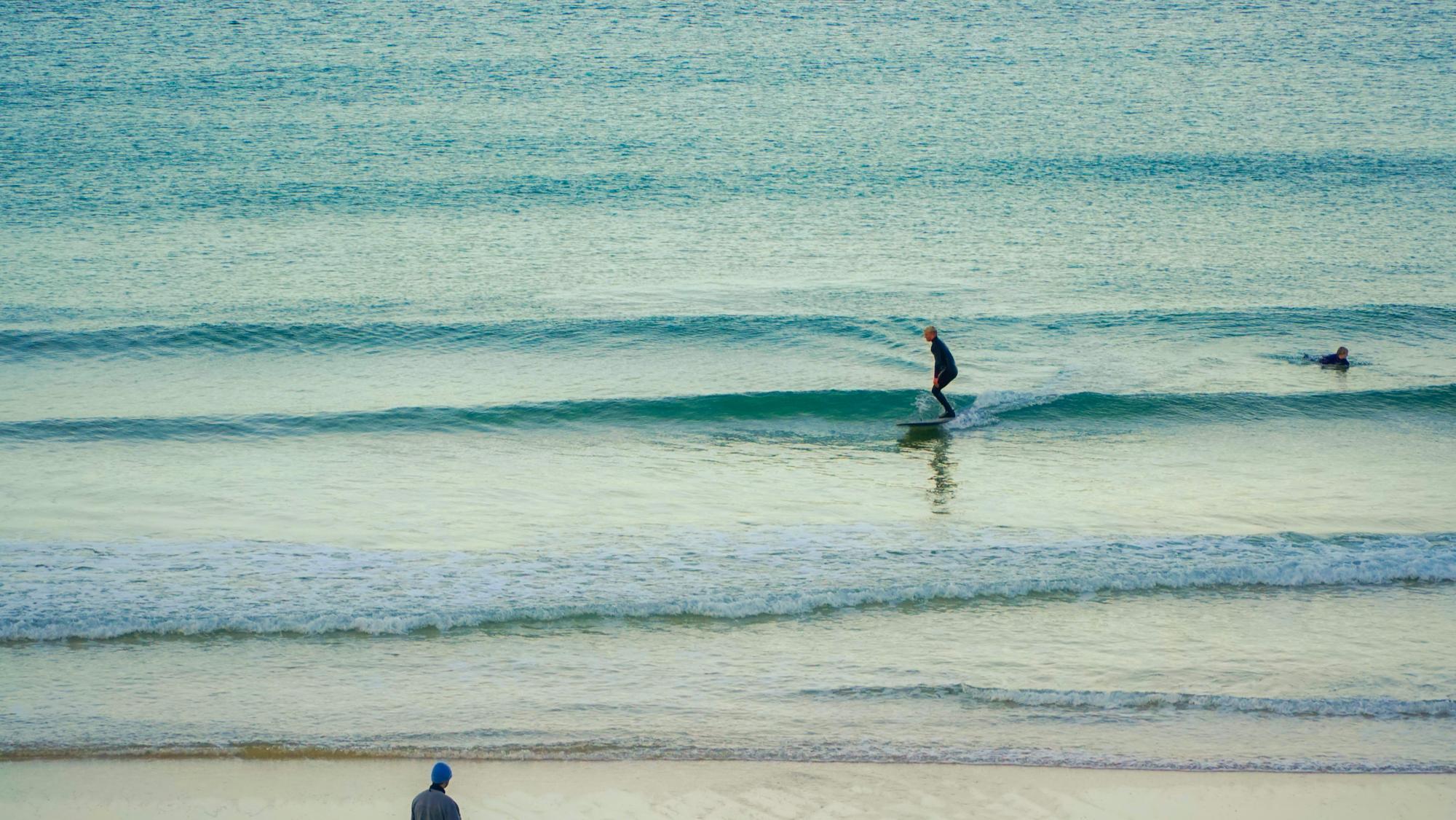
Clean, exposed, and about as central-St-Ives as surfing gets — you can be in the water and back in town for lunch inside twenty minutes.
- Skill level: intermediate and above generally, with clean banks and big swells on their day
- Lifeguards & lessons: RNLI seasonal patrol; a summer surf school runs on the beach
- Food: Porthmeor Beach Café and West (the restaurant formerly known as West Beach) sit right on the sand — good for a call-off-due-to-conditions consolation lunch
- Parking/transport: St Ives is pay-and-display and gets tight in summer — the train station is a short walk from the beach if you’re coming from Penzance direction
Honest local detail: it’s the easiest surf-then-explore combo in Cornwall — nowhere else puts you this close to a proper town after a session.
Polzeath Beach
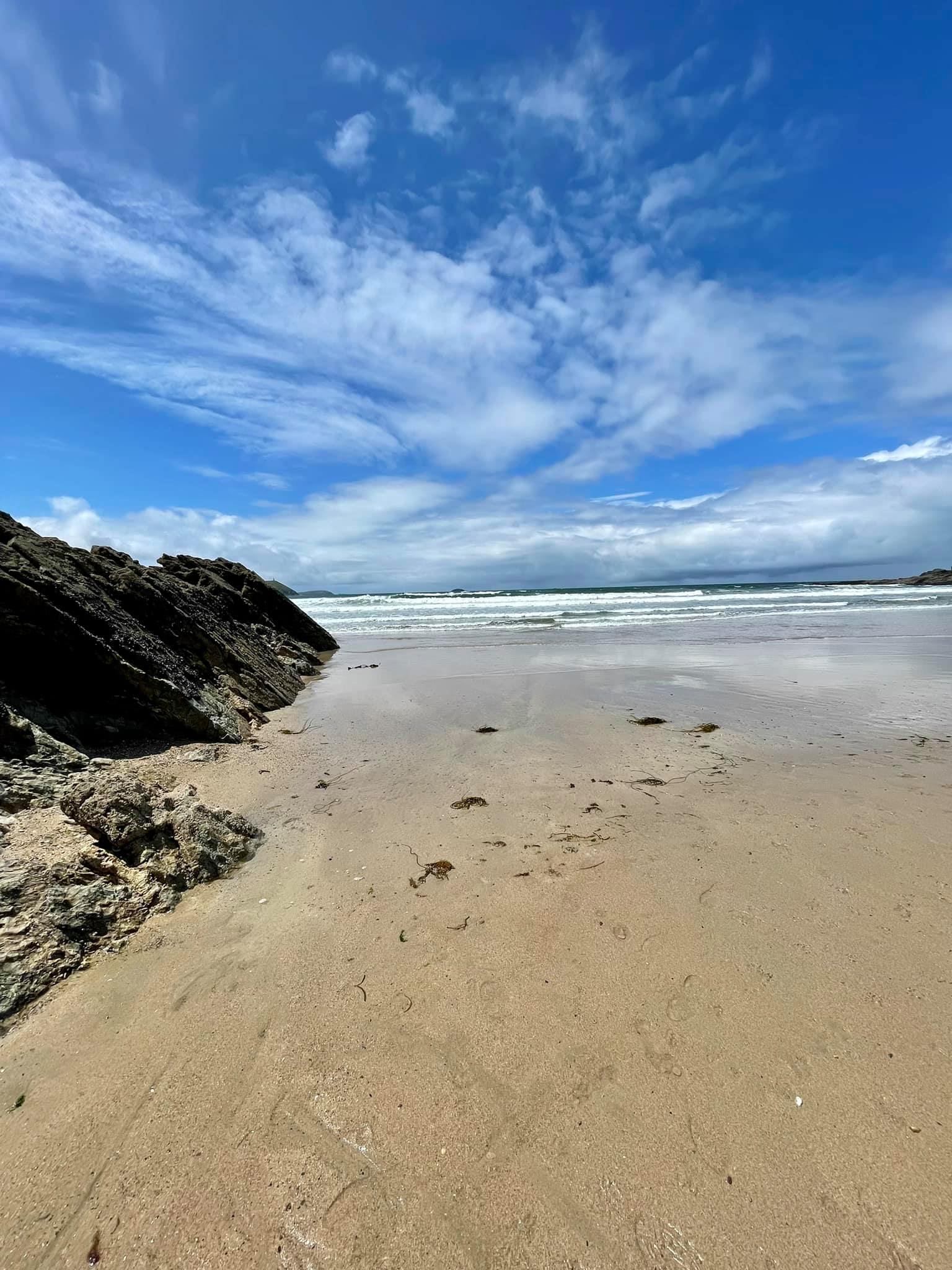
Wide, sandy, and about as forgiving as Cornish surf gets — Polzeath is the beach I’d send an actual first-timer to over any other on this list.
- Skill level: genuinely the best beginner beach in this guide; the odd bigger day from offshore banks gives improvers something to work with too
- Best conditions: works across most tides, which is part of why it’s such a reliable learner spot
- Parking: beach car park, gets full fast on a sunny day
- Lifeguards & lessons: RNLI seasonal patrol; Wavehunters (the only school/hire directly on the beach), Surf’s Up Surf School, and George’s Surf School (private lessons) all operate here
Honest local detail: because it’s the best learner beach, it’s also the most crowded with learners in summer — if you’re more experienced, give beginners a wide berth rather than weaving through a lesson group.
The far west: Sennen Cove
Technically on the west coast near Land’s End, but Sennen (Whitesand Bay) faces almost due north-west and picks up Atlantic swell nearly as well as the north coast proper — the exception that makes the north/south rule useful rather than absolute.
Sennen Cove
- Skill level: genuinely something for everyone — gentler water toward the main beach and south end, more swell and more experienced surfers toward the north end where offshore sandbanks pick up size
- Best conditions: works across a wide range of tides; check wind against the beach’s north-west aspect
- Lifeguards & lessons: RNLI seasonal patrol; Sennen Surfing Centre, one of the UK’s longest-running surf schools, is open daily through October
Honest local detail: it’s less than two kilometres from Land’s End, so pair a session here with the walk out to the headland — or, if you want something with a bit more adrenaline than a lesson, coasteering operators work this stretch of coast too.
South coast: the fallback (and when it’s worth the drive)
Remember the rule from earlier — south coast surf is the overflow valve, worth checking when the north coast’s too big, too messy, or blown out. It’s sheltered by comparison, so it needs a proper groundswell to be any good, but when it lines up, it’s uncrowded and genuinely excellent.
Praa Sands
Between Helston and Penzance, on the southwest coast rather than the north — a different beast entirely from the rest of this list.
- Skill level: beginners through experienced, though the wave gets heavier and more barrel-like at high tide — not the place to learn on a big day
- Best conditions: needs a solid groundswell to work (see the north vs south section above) and a northerly wind to be offshore
- Parking: beach car park at the western end
- Facilities: café, restaurant, and beach shop nearby; board hire available from the beach — worth calling ahead to confirm current operators rather than assuming
Honest local detail: because it only really turns on with a proper swell, it never gets the reliable-daily-wave reputation the north coast beaches have — treat a good day here as a bonus, not a plan.
Porthleven
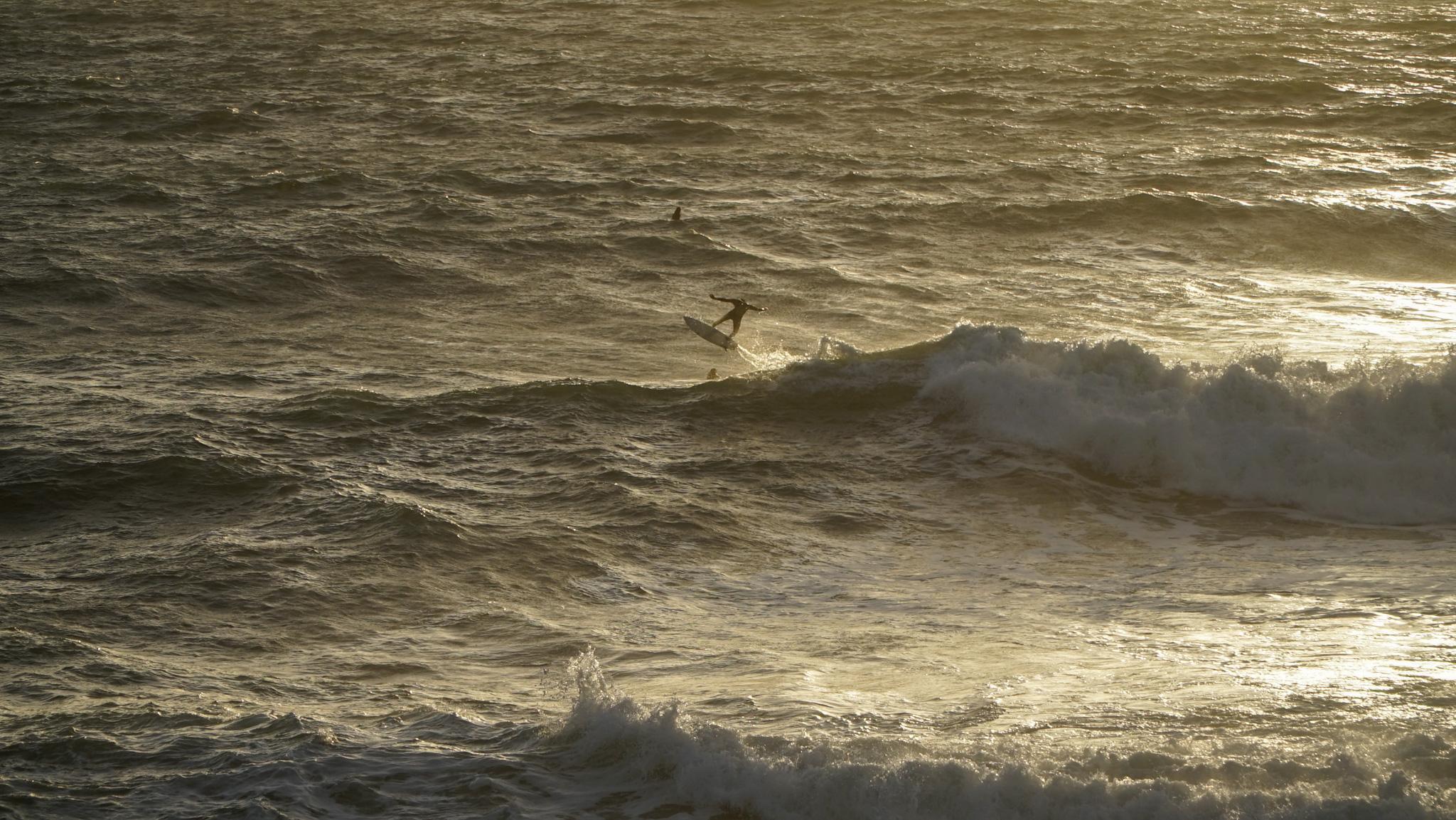
Not a beginner entry, and I’m not going to pretend otherwise: the reef on the north side of the harbour produces one of the heaviest, most dangerous waves in the country.
- Skill level: experts only, full stop — miss your positioning and you’re getting slammed into a shallow reef, not soft sand
- Best conditions: needs a decent groundswell; often firing when the north coast is too big to surf safely, which is exactly the south-coast pattern described above
- Swimming: not recommended here at all — this is a wave to watch from the harbour wall unless you genuinely know what you’re doing
- Nearby: Porthleven town has good cafés and a National Trust site at Penrose, a short walk or drive from the beach itself
Honest local detail: if you’re not sure whether you’re good enough for Porthleven, you’re not — watch a session from the wall first, and if that doesn’t answer the question, it wasn’t going to be yes.
Grab a board and go
Thirteen beaches, thirteen different personalities — but the decision tree is simple: check the north coast first, match the beach to your skill level and today’s wind and tide rather than a beach’s reputation, and treat the south coast as your backup when the Atlantic’s too much. If you’d rather try something flatter while you get your bearings, paddleboarding covers a lot of the same coastline at a gentler pace, and our wider watersports in Cornwall guide rounds up everything else worth trying between sessions. And if the south coast’s got you curious about Falmouth specifically, we’ve covered whether you can actually surf there too (short answer: not really, but there’s plenty else to do on the water).
Sorting out where to stay before any of this? Our where to stay in Cornwall guide matches area to trip type, including which bases put you closest to the beaches on this list.

Introducing Eliot, the Editor here and Cornwall local with a wanderlust spirit and an insatiable appetite for adventure. With a passion for the great outdoors, he can often be found catching waves on his surfboard, scaling peaks on a hiking trail, or discovering hidden gems in his exploration of Cornwall.