
Ask ten Cornish grandmothers where to get the best cream tea and you’ll get eleven answers, delivered with the kind of conviction usually reserved for the correct order to eat a pasty (crimp end first, obviously). Round here, a cream tea isn’t a novelty laid on for visitors — it’s basically its own food group. Warm scones, proper jam, a genuinely alarming amount of clotted cream, and a pot of tea you’re not allowed to rush. I’ve spent an unreasonable number of afternoons testing this county’s cream teas so you don’t have to gamble on a tourist trap. Thirteen spots, coast to coast. Jam first — we’ll get to why.
The jam goes on first (and other rules)
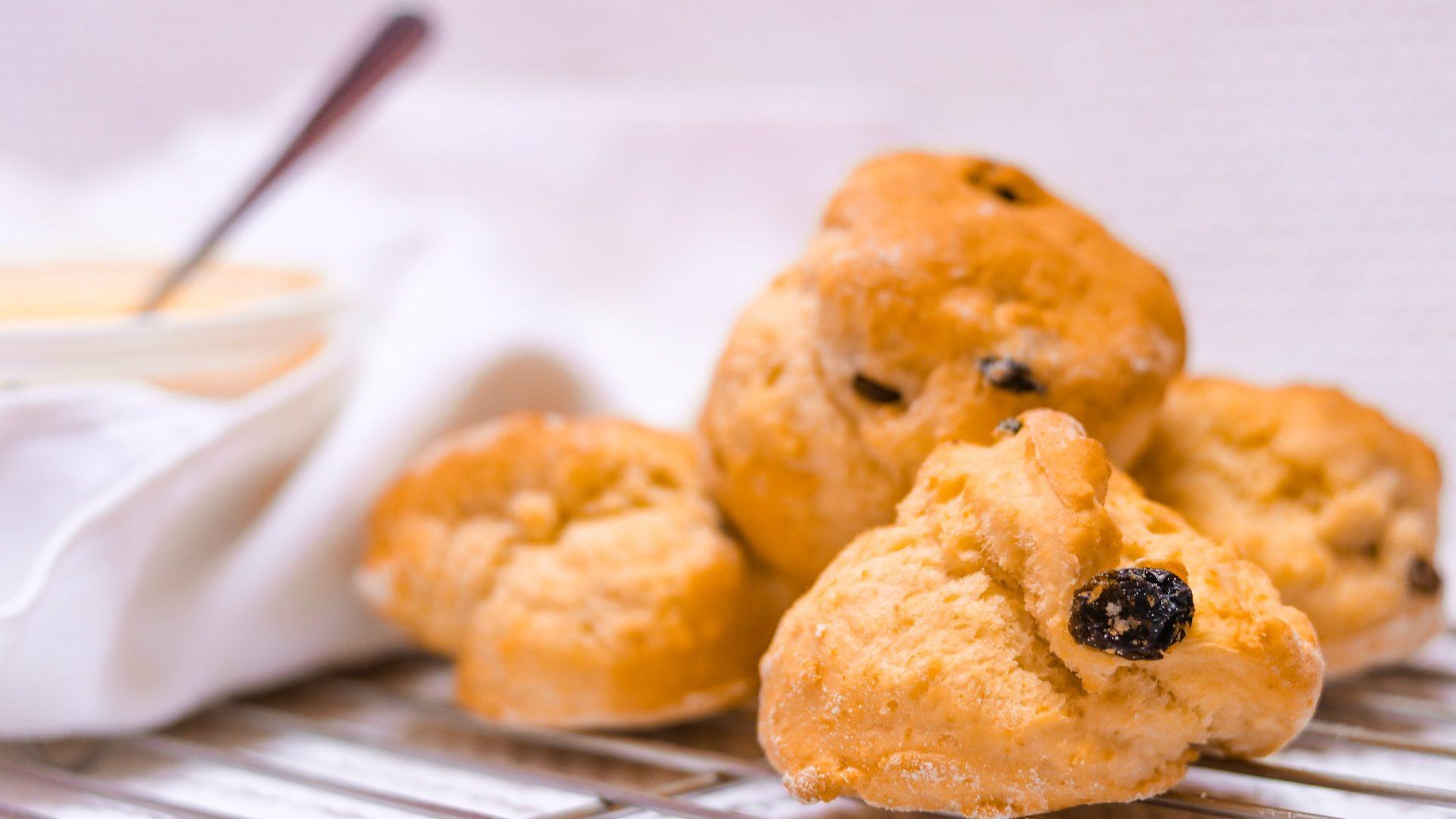
Let’s sort this out before we go anywhere: in Cornwall, the jam goes on the scone first, then the clotted cream on top. Split your scone, spread the jam, then finish with a generous dollop of cream — it should sit like a little white hill, not get smeared in.
Cross the Tamar into Devon and they’ll tell you it’s the other way round — cream first, spread almost like butter, jam on top. Neither county is ever going to budge, and the debate has been running long enough that Cornwall.co.uk wrote an explainer trying to settle it (spoiler: it didn’t).
There’s a reason we’re precious about ours. Cornish clotted cream has held Protected Designation of Origin (PDO) status since 1998 — the same category of protection that covers Champagne and Parma ham. To legally call it “Cornish clotted cream,” the milk has to come from Cornwall, the cream has to be made in Cornwall, and it needs a minimum fat content of 55%. Devon has tried more than once to get similar protection for the term “Devon cream tea” and been blocked. Rodda’s, based near Redruth, is the county’s best-known producer and the cream you’ll find on most of the scones below.
Right. Onto the good stuff.
Stein’s Coffee Shop, Padstow
Padstow is basically shorthand for “food pilgrimage” in Cornwall these days — see our full Padstow guide for the rest of the trail — and Rick Stein’s empire runs a good chunk of the town. For cream tea specifically, head for Stein’s Coffee Shop, tucked among the delis and bakeries. A proper Cornish cream tea with clotted cream and jam, best eaten at an outside table watching the harbour traffic go by.
Honest tourist tip: the pastries next door at Stein’s Deli aren’t baked on site — they’re brought in from local bakery Butcher’s Bakehouse — so if you want an actual fresh-from-the-oven scone, the Coffee Shop is the better bet, not the deli counter.
The Chapel, Port Isaac
Port Isaac (of Doc Martin and Fisherman’s Friends fame — more in our Port Isaac guide) has a genuinely brilliant cream tea inside a converted 19th-century Methodist chapel. The Chapel serves scones still warm from the oven with a properly generous dollop of both jam and cream — not the stingy version some tourist-trap cafés get away with. It’s dog-friendly, and reviews are still glowing well into 2026, so it’s not coasting on an old TripAdvisor badge.
Detail worth knowing: ask for a table in the old chapel gallery upstairs if you actually want to clock the building’s former life, rather than just its cake stand.
Trevathan Farm, St Endellion (near Polzeath & Rock)
A short drive inland from Polzeath and Rock, Trevathan Farm is the cream tea to know if you want something more “proper farm” than “seafront café.” It’s a pick-your-own strawberry farm, and — this is the bit most tourists don’t clock — the jam on your scone is made from the very same strawberries growing in the fields outside. Big lawn, tractors, a play park, and a farm shop stuffed with more of their own preserves to take home. A great option if the kids have had enough of the beach for one afternoon.
The Weir, Bude
Most cream teas in Bude come with a sea view, which is exactly why The Weir is worth the detour — it looks out over the millpond and Bude’s small wildlife hide instead, a proper slice of green Cornwall rather than blue. Scones arrive oven-fresh with clotted cream, and it’s a genuinely nice spot to sit with a coffee and watch moorhens instead of surfers for once. Two scones with jam and cream runs around £6.75, correct at time of writing — worth confirming before you go, as with any café price.
Chapel Porth Beach Café, St Agnes (near Perranporth)
A National Trust concession café at one of the most dramatic beaches on this stretch of coast, a few minutes from Perranporth. Chapel Porth Beach Café does a proper cream tea, but it’s more famous for the “Hedgehog” — a scoop of Cornish ice cream rolled in clotted cream and crushed hazelnuts, served here since 1986.
The detail most visitors miss: it’s the same clotted cream going on both the scone and the Hedgehog. If you’re torn between the two, just have both — nobody’s judging you in a National Trust car park.
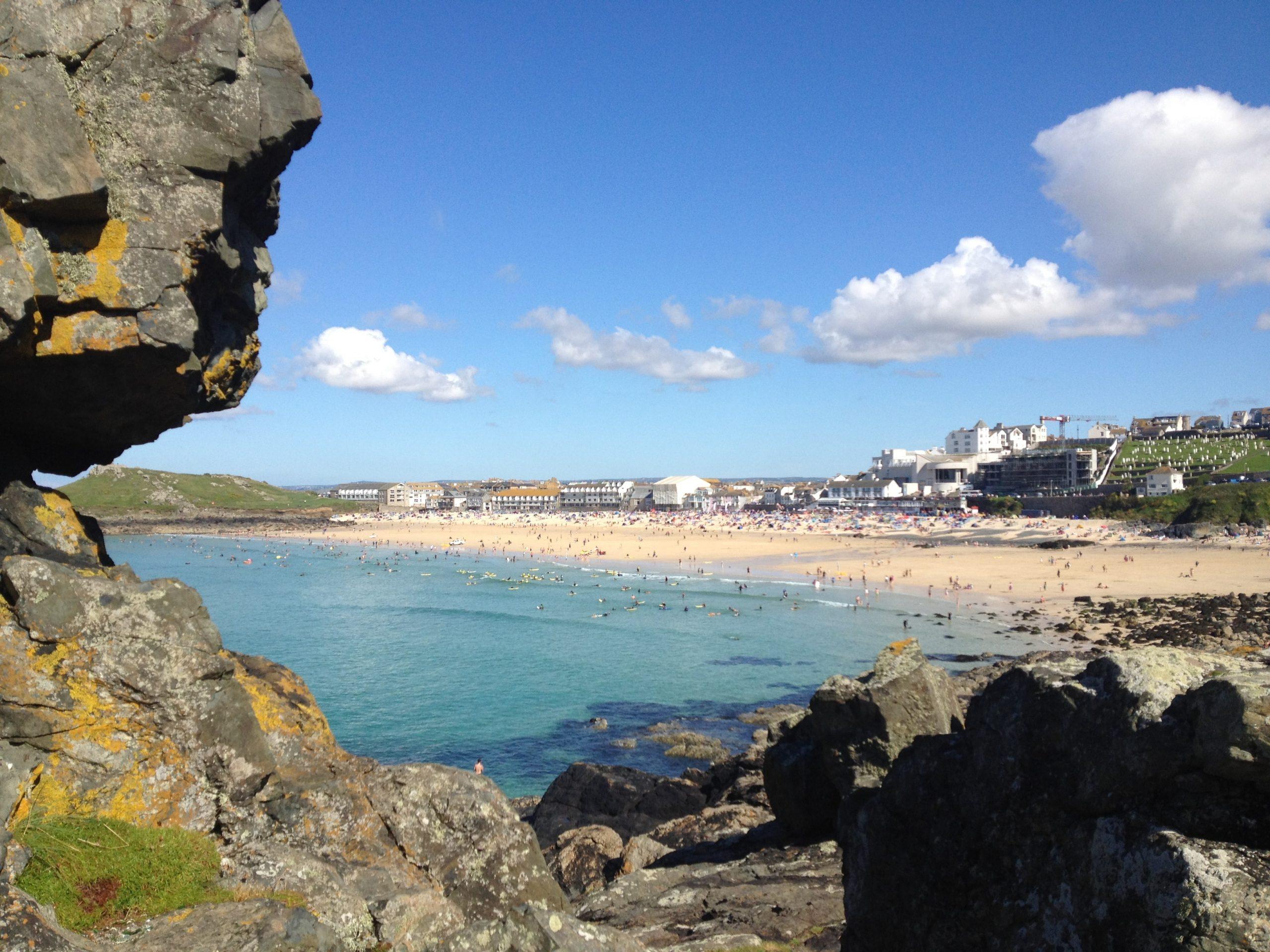
Porthmeor Beach Café, St Ives
Right on Porthmeor Beach in St Ives, with the kind of panoramic view over the surf break most restaurants would charge double for. Scones are fresh, jam and cream generous, and — genuinely useful tip — this is the best cream tea in town for watching the surf school lessons mid-scone, since the café sits right above the break. Get there before midday in summer or you’ll be queuing with everyone else who had the same idea. Making a day of it? The best of the town’s browsing is a five-minute wander away — see our guide to the shops in St Ives.
Rock Pool Café, Mousehole (near Penzance)
Ten minutes from Penzance, Mousehole’s Rock Pool Café looks straight out over the village’s namesake rock pool — at low tide you’ll be eating your scone while watching kids net crabs below the terrace. Big warm scones, proper jam, no skimping on the cream. Cosy inside if the weather turns, ocean-side terrace if it doesn’t. It’s a small café, so don’t expect fast service on a packed August Saturday — treat the wait as part of the point.
Trevaskis Farm, Hayle
A proper working farm restaurant just outside Hayle — a handy stop between St Ives and Penzance — Trevaskis Farm serves cream teas from midday to 3pm using fruit and veg grown across its own 28 acres. It’s a proper family day-out spot — pick-your-own in season, a play area, and portions locals describe as “generous” rather than “Instagram-sized.” Not the place for a quiet, romantic cream tea, but brilliant if you’ve got kids to tire out first.
Roskilly’s, St Keverne, The Lizard
An organic dairy farm on the Lizard Peninsula, and one of the very few places in Cornwall where the clotted cream on your scone comes from cows you can actually go and say hello to afterwards. Roskilly’s milks around 125 Jersey cows at Tregellast Barton Farm, and that milk goes straight into their own ice cream (30-plus flavours) and cream teas. It’s more of a destination than a quick stop — factor in time to wander the lakes and woodland walks around the farm. A handy pit stop too if you’re basing yourself around Porthleven or the Lizard’s south coast.
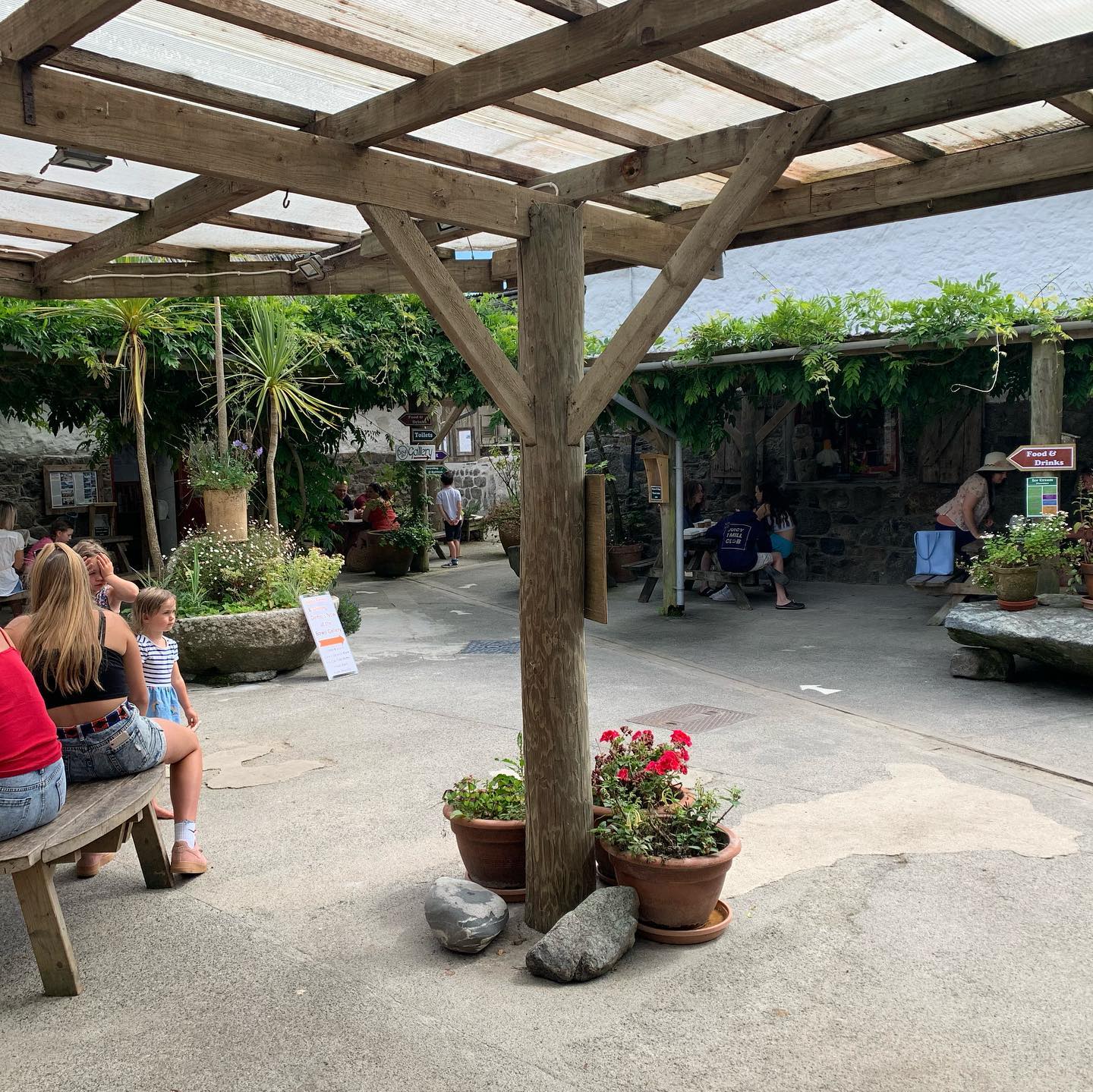
Crofters Café, Trelissick (National Trust)
A National Trust estate on the Fal estuary, roughly between Truro, Falmouth and Penryn, Trelissick’s Crofters Café does a proper cream tea with, unsurprisingly for the Trust, everything sourced as locally as they can manage. Grab a bench with a harbour view if you can, and there’s a decent chance you’ll catch the King Harry Ferry crossing mid-scone — one of the few genuinely free bits of theatre that comes with a cream tea in Cornwall.
The Fowey Hotel, Fowey (near St Austell)
A short hop from St Austell, The Fowey Hotel has been standing on the Fowey estuary since 1882 — originally built as a grand Victorian hotel for a branch railway line that, brilliantly, never actually got finished. Cream teas are served on the terrace in summer, looking straight down the river towards the harbour mouth. It’s a “dress a bit nicer than beach clothes” cream tea rather than a flip-flops one.
The Idle Rocks, St Mawes
The poshest entry on this list, and worth flagging that it’s technically a full afternoon tea rather than a bare-bones cream tea — sandwiches and cakes alongside the scones, served on a south-facing terrace looking straight over St Mawes harbour. It’s not cheap: the Cornish Afternoon Tea runs around £25 a head, or £37 with sparkling wine, served 3–5pm with booking recommended. Save it for an anniversary rather than a random Tuesday — but it’s genuinely one of the best views you’ll eat a scone in front of in Cornwall.
Charlotte’s Tea House, Truro
Inside Truro’s Coinage Hall — literally the building where Cornish tin was once weighed and taxed centuries ago — Charlotte’s Tea House is the proper Victorian-tearoom cream tea experience, right down to the bone china. Everything, scones included, is baked in-house daily, and it’s an easy stop if you’re already exploring things to do in Truro. Groups of five or more can book ahead, which is worth doing — it’s popular enough that walk-ins queue on a busy Saturday.
FAQs
What’s the difference between a Cornish and a Devon cream tea?
In Cornwall, you split the scone and spread jam first, then finish with a dollop of clotted cream on top. In Devon, it’s reversed — clotted cream goes on first, almost like butter, with jam spread over it. Both counties are equally stubborn about which is correct; we’d just point out that only one of them has PDO protection on its cream.
Is Cornish clotted cream actually protected, like Champagne?
Yes. Cornish clotted cream has held Protected Designation of Origin (PDO) status since 1998. To use the name legally, the cream must be made from milk produced in Cornwall, made in Cornwall, and contain a minimum of 55% fat — the same category of protection that covers Champagne, Parma ham and Stilton.
How much does a cream tea cost in Cornwall in 2026?
Most classic cream teas — two scones, jam, clotted cream, a pot of tea — sit somewhere between £5 and £8, with farm cafés and beach kiosks at the cheaper end. Step up to a full afternoon tea at a hotel like The Idle Rocks and you’re looking at £25 upwards. Prices move around, so treat anything here as a guide rather than gospel — always worth checking a venue’s own site before you go.

Meet Ben, a wanderlust-stricken wordsmith hailing from the surf paradise of Newquay. With a pen and a passion for storytelling in hand, from rugged coastal hikes to secret spots off the beaten tourist path, join Ben as he guides you through the very best of what Cornwall has to offer.