
Every year someone messages me two weeks before their Cornwall trip asking “so where do we actually stay?” — and every year I give the same answer: it depends where in Cornwall you mean, because Cornwall is a lot bigger than people plan for. Bude to Land’s End is the best part of 90 miles, and in August traffic that’s a good two-hour drive one way — not a quick pop-over for dinner. Pick a base on the wrong side of the county from the beach you saw on Instagram and you’ll spend half your holiday in the car. This is the guide I wish I could just forward people: which bit of Cornwall suits which kind of trip, honestly, including the downsides nobody puts in the brochure.
The quick answer
- First visit: St Ives or Falmouth — easy to love, easy to get to, plenty to do without a car.
- Surf trip: Newquay or the north coast (Perranporth, Bude) — the swell and the surf schools are here.
- Family holiday: Bude or Perranporth — big flat beaches, rock pools, less scrum than the south coast honeypots.
- Foodie trip: Padstow — Rick Stein put it on the map and it hasn’t looked back since.
- Quiet and authentic: Penzance and the far west, or St Austell Bay — real working towns, not resort towns.
- No car: Falmouth, Penzance or St Ives — all three sit on a train line and work as a base on foot.
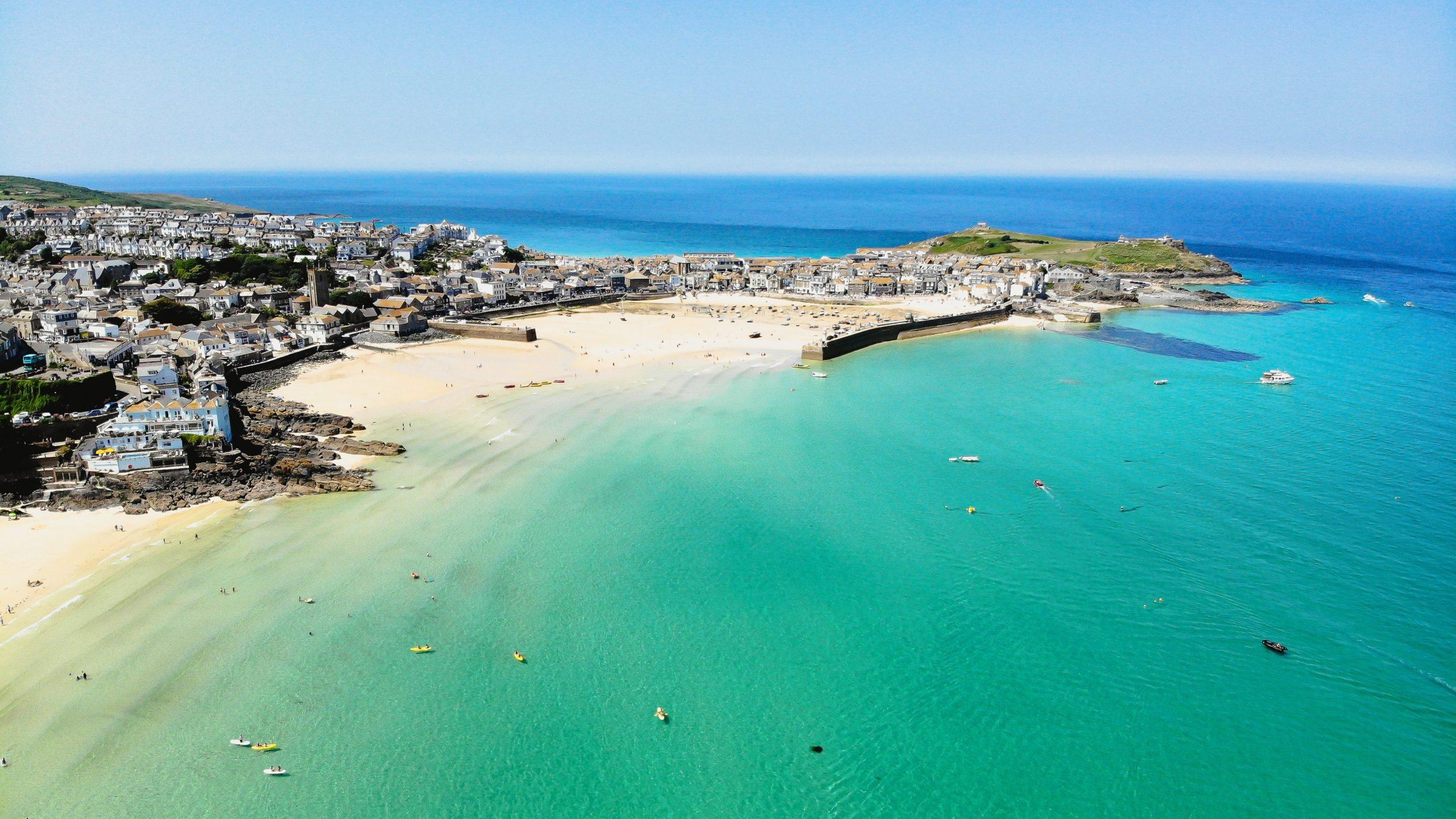
St Ives — the easiest first visit
If this is your first trip to Cornwall and you want somewhere that just works, St Ives is the safe bet — three beaches you can walk to, cobbled streets full of galleries and pasty shops, and a genuine sense of occasion when the light hits the harbour in the evening. It’s also got a station on the St Ives Bay Line, a ten-minute branch line from St Erth on the main line, which makes it one of the few Cornish towns you can properly do car-free.
The honest downside: everyone else has had the same idea. Parking in town is genuinely difficult from Easter to September, the streets are narrow enough that an estate car feels oversized, and by August the main beach paths are shoulder to shoulder by 11am. Sensible move if you are driving — book somewhere with parking included, or use the St Erth park-and-ride and let the branch line do the last stretch for you. Best time to go if you want it calmer: May, June or September, when the light is still good and the crowds have thinned. Full details in the St Ives guide.
Falmouth & Penryn — the grown-up base, without giving up the town
Falmouth does something few Cornish towns manage: it’s a proper working harbour town — sailing, a university, real pubs — that also happens to have several genuinely good beaches a short walk from the centre. It sits on the Maritime Line branch (change at Truro), so it’s another solid car-free option, and it has more restaurants and nightlife than most of the places on this list, which makes it a strong pick if you don’t want your evenings to shut down at 9pm.
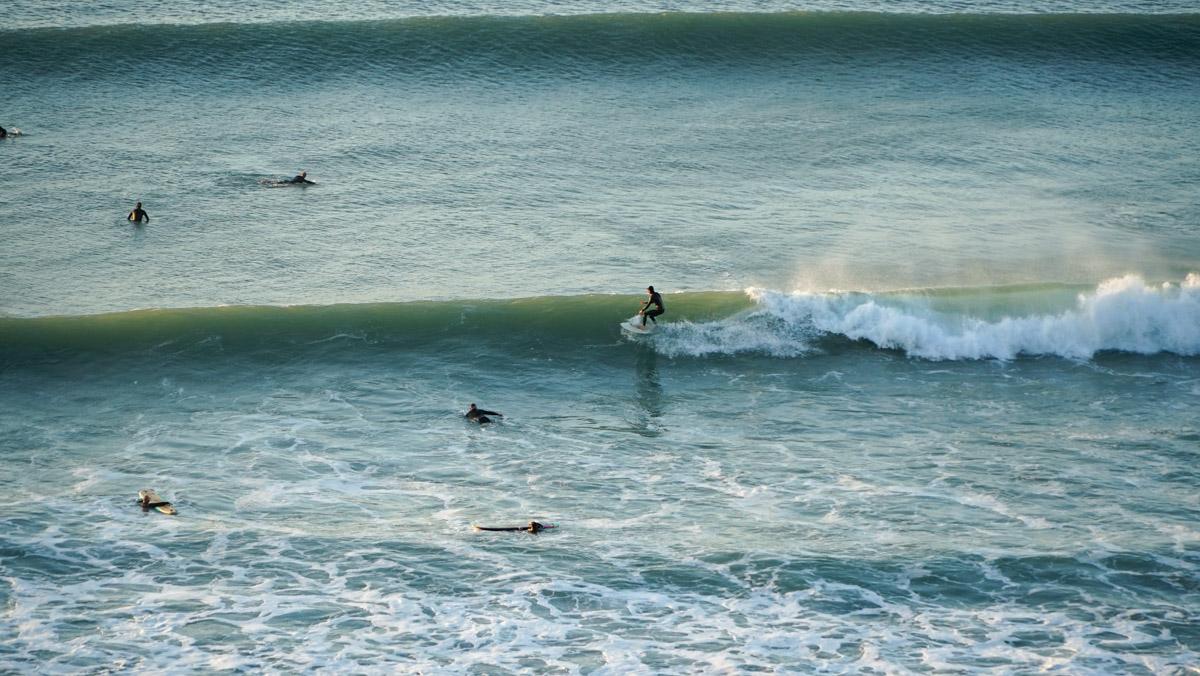
Downside worth knowing: term-time Falmouth (September to June) has a different energy — it’s a university town, and student nightlife isn’t everyone’s idea of a relaxing coastal break. If you want the harbour buzz without it, look a couple of miles up the river to Penryn — one of the oldest towns in Cornwall, genuinely overlooked by visitors, and a much quieter base that still puts you five minutes from Falmouth by car or a pleasant riverside walk. See the Falmouth guide and the Penryn guide.
Newquay & the surf coast — book it for the waves, not the quiet
Newquay is Cornwall’s surf capital, full stop — Fistral Beach, surf schools on every corner, and a nightlife scene that’s loud and proud about it. If a surf holiday is the actual point of the trip, this is still the obvious base: consistent breaks, gear hire everywhere, and a genuinely fun town once the sun goes down. It also has its own station, the Atlantic Coast Line branch from Par, though services thin out sharply outside the summer timetable.
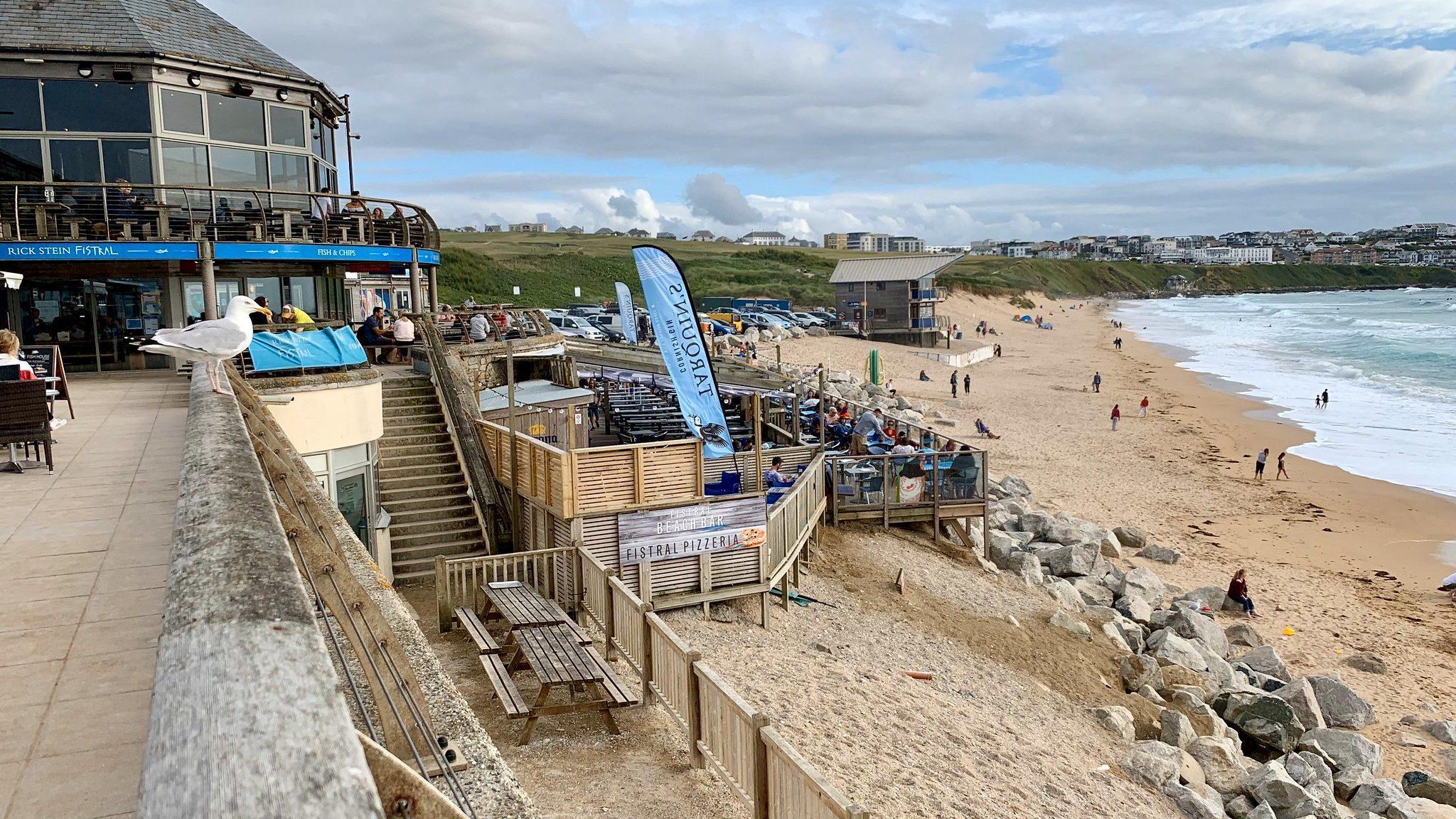
Say it plainly: Newquay is not the place for a quiet family week or a romantic weekend. Stag and hen groups love it for a reason, and that reason gets loud on a Saturday night in the town centre. If you want the surf without the club scene, stay slightly out of the centre or look further along the coast — see Perranporth below. Best time for the actual surfing: autumn and spring bring the best swell without peak-season prices. More in the Newquay guide.
Padstow & the Camel Estuary villages — the foodie base
Padstow is basically shorthand for “good food” in Cornwall now — Rick Stein’s restaurants anchor the town, but the wider Camel Estuary has become one of the best-eating corners of the county. It’s also postcard-pretty around the harbour, which is exactly why it gets busy: this is one of the most expensive and most fully-booked stretches of Cornwall in peak season, and there’s no railway station in Padstow itself (the old line is now the Camel Trail cycle path) — the nearest station is Bodmin Parkway, roughly 24 miles and the best part of an hour away by connecting bus.
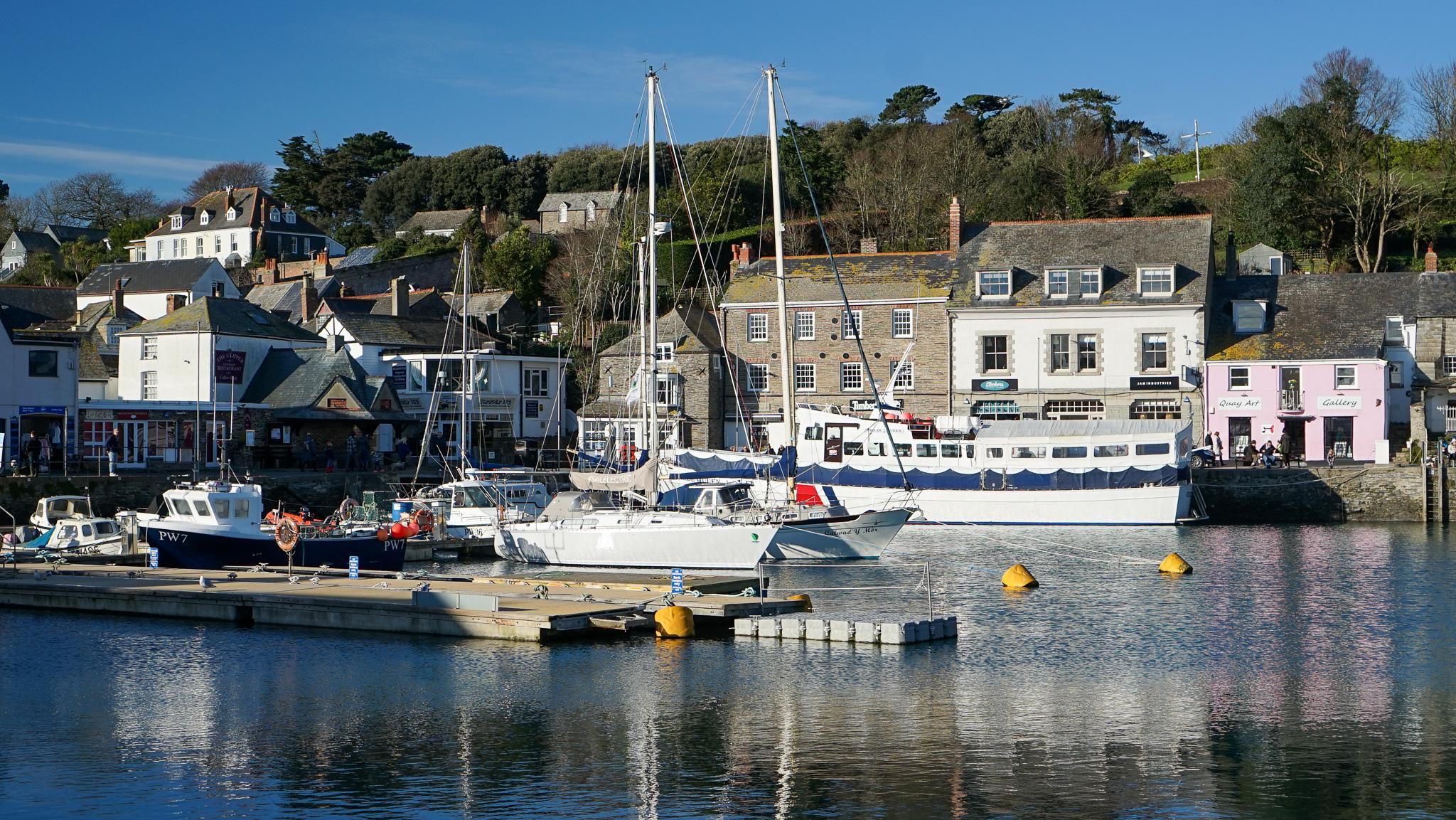
If Padstow itself is booked solid or over budget, the villages around the estuary are worth a proper look. Port Isaac trades on its Doc Martin fame and has real character to back it up, while Polzeath is the family-and-surf pick, with a wide sandy beach that’s easier on toddlers than most of the north coast. Both put you within a short drive of Padstow’s restaurants without paying Padstow prices for the bed. See the Padstow guide, Port Isaac guide and Polzeath guide.
Bude — proper family Cornwall, without the crowds or the crowds’ prices
Bude sits right up near the Devon border, and it’s the pick I give people who want a genuine family beach holiday without competing for towel space. Big flat sand, sea pools that fill and empty with the tide, and a town that hasn’t been entirely given over to holiday lets. It stays noticeably calmer than the honeypot towns further south, even in August.
The trade-off is getting there. Bude has had no railway station since 1966 — the nearest is Okehampton, about 30 miles away on the re-opened Dartmoor Line, then a bus in. In practice, this is a car-based base: budget for the drive and don’t plan on a train day trip in. Once you’re there, though, it’s an easy 15-minute hop up the coast to Widemouth Bay and further afield to the rest of north Cornwall for the day. Full guide at Bude, and the wider region in the North Cornwall guide.
Perranporth — the middle ground: surf, sand, and still liveable
Perranporth is the base I recommend when someone wants the surf-town feel of Newquay without actually staying in Newquay. Three miles of beach, a proper local surf scene, and none of the club-strip energy — it’s a town people actually live in year-round, not just a summer stage set. Good for families who want their teenagers to have surf lessons in the morning and everyone to be in bed at a sane hour that night.
Downside: it’s smaller than Newquay, so the restaurant and shop choice is thinner, and there’s no railway station here either — you’re driving or bussing in from Truro. Worth it for the trade, in my view. Best time to visit for a calmer beach: shoulder season (May, June, September) when the swell’s often still decent but the car parks aren’t full by 10am. More in the Perranporth guide.
Penzance & the far west — the quiet, authentic pick
Penzance sits at the literal end of the line — the last stop on the Cornish Main Line, and the closest thing Cornwall has to a proper working town rather than a resort. It’s rougher round the edges than St Ives or Falmouth, and I mean that as a recommendation: fewer gift shops, more actual Cornish life, and it puts you closest of anywhere on this list to Land’s End, Mousehole and the far-west coves that don’t make the postcards. Being a rail terminus also makes it one of the strongest car-free bases in the county.
Honest downside: the town centre itself isn’t as immediately pretty as the places built for tourism, so if you want to step off the train into something photogenic, this isn’t quite it — you’ll want to venture out to the coves for that. For something smaller and more polished nearby, Porthleven on the south coast is worth a look — a genuinely lovely working harbour that’s stayed low-key. See the Penzance guide and the Porthleven guide.
St Austell Bay & Truro — the practical middle, and the Eden Project base
St Austell doesn’t get the glossy write-ups, and that’s rather the point — it’s authentically Cornish, easier to find a room or a restaurant table, and it sits right by the Eden Project and Charlestown’s tall ships, plus a run of good beaches nearby. It’s also handily central: closer to more of Cornwall’s coastline than almost anywhere else on this list, which matters if your group can’t agree on north coast or south coast.
If you’d rather have a bit more city (such as it is — Cornwall’s only city, to be precise), Truro is fifteen minutes up the road, sits on the Cornish Main Line, and gives you a cathedral, proper shops and restaurants, and easy rail or road links out to Falmouth, St Austell and beyond. Neither is a beach base first and foremost — think of both as sensible, well-connected hubs rather than seafront stays. See the St Austell guide and the Truro guide.
Getting around Cornwall
The A30 is the spine of the county and it will be busier than you expect, especially on Saturday changeover days in July and August — that’s when a Bude-to-Penzance run (roughly 75 miles, 1 hour 40 in clear traffic) can easily creep towards two and a half hours. Cross-county journeys on the smaller roads (say, St Ives to Padstow — 46 miles, just under an hour with a clear road) are slower than the mileage suggests, since there’s rarely a direct route.
Rail helps more than people expect if your base is right: the Cornish Main Line runs Penzance–Truro–St Austell–Plymouth, with branch lines off it to St Ives (from St Erth, ten minutes), Falmouth (from Truro), and Newquay (from Par, with a thinner off-season timetable). Bude, Padstow, Port Isaac and Polzeath have no station at all — if you’re basing yourself in any of those, plan on a car or be ready for long bus connections.
School-holiday pricing, honestly
Cornwall accommodation prices swing hard with the school calendar. A two-bedroom cottage that’s £400–600 a week in low season can run £800–1,500 in the July–August peak, and premium spots in St Ives or Padstow push past £2,000 for the same size property in the busiest weeks. Shoulder-season stays — May, June, September — typically come in 30–40% cheaper than peak August for a very similar holiday, which is the trade I’d make most years if school runs allow it.
Booking ahead, honestly
If you’re locked into school holidays, book early — properly early. The best cottages in St Ives and Padstow for the first couple of weeks of August routinely go by Christmas the year before, and anything with parking, sea views or a short walk to the beach disappears first. Outside peak season you’ve got far more room to be spontaneous; in July and August, spontaneity mostly gets you the leftovers.
FAQ
Where should I stay in Cornwall for a first visit?
St Ives or Falmouth. Both are easy to get to (both sit on a rail branch line), both have plenty to do within walking distance, and both give you a proper taste of Cornwall without needing a car to enjoy your evenings.
Is it better to stay in one place or move around Cornwall?
One base, for most trips. Cornwall is bigger than it looks on a map — a Bude-to-Penzance drive is nearly two hours even before summer traffic — so a single well-chosen base with day trips out beats packing and unpacking every two or three nights. Only split your stay if you’re covering both the north and south coast on a longer trip.
Where can I stay in Cornwall without a car?
Falmouth, Penzance or St Ives. All three sit directly on the rail network — Penzance is the main-line terminus, Falmouth and St Ives are short branch-line hops — and all three have enough shops, beaches and restaurants within walking distance to make a car unnecessary for the trip itself.

Meet Ben, a wanderlust-stricken wordsmith hailing from the surf paradise of Newquay. With a pen and a passion for storytelling in hand, from rugged coastal hikes to secret spots off the beaten tourist path, join Ben as he guides you through the very best of what Cornwall has to offer.